


Let’s get straight to the point. That “great deal” your team just found? It might be quietly waiting for you on the dock.
Every year, over 1.25 million shipments of dangerous goods fly through our skies. This number is growing fast. Your next delivery could be anything from lithium batteries for prototypes to dry ice for a lab, or even industrial-strength cleaners.
This isn’t just a small detail in logistics. It’s a big responsibility. The shipper’s job ends when the truck leaves. Yours starts when that pallet arrives.
Not knowing about DOT, IATA, and IMDG rules isn’t harmless. It’s a financial and legal risk. Think of this as your guide to protect yourself in the modern supply chain.
We’re moving beyond the shipper’s checklist to your world. Your job is to understand the symbols on the box and the complex paperwork that comes with it.
That “routine delivery” shouldn’t need hazmat suits. Let’s clear up what you need to know before you accept that shipment.
Why Procurement Should Review Transport Sections (SDS §14)
The transport section of a Safety Data Sheet is not just extra information. It’s a detailed guide for handling dangerous goods. Ignoring it is like sending troops into battle without a plan. For procurement teams, this section is key to avoiding mistakes.
Section 14 is like a key to understanding hazardous materials. It explains chemical dangers in a way that regulators can understand. You’ll find important details like UN numbers and how to pack them safely.
In the US, this info is tied to 49 CFR. This is the Department of Transportation’s guide for moving dangerous goods. Not following it can lead to big problems, not just for you but for others too.
Procurement teams need to be careful. They don’t have to know every detail of 49 CFR. But they should look for any mistakes that could lead to trouble.
- The SDS §14 lists a Class 8 corrosive with Packing Group II
- The supplier’s quote mentions “standard ground shipping”
- Your internal system has no special handling flags
Ignoring these details can cause big problems. It can lead to evacuations and huge fines. The rules for Class 8 materials are strict and must be followed.
Understanding these rules can prevent accidents and save money. One mistake with dangerous goods can shut down operations for a long time. Training everyone in the supply chain is essential.
Procurement teams are becoming more important. By checking SDS §14, they’re not being hard to work with. They’re making sure everything is done right.
The “click buy, wait for doorbell” method is okay for some things. But with dangerous goods, it’s too risky. Following 49 CFR rules is everyone’s responsibility.
Procurement teams should check a few things:
- Does the SDS §14 hazard class match the quoted transport method?
- Are the UN number and proper shipping name consistent?
- Does the packing group align with packaging specifications?
- Is emergency response information clearly available?
This isn’t about becoming an expert overnight. It’s about doing your job well. The stakes are high, affecting safety, the environment, and your company’s reputation.
In today’s world, ignoring these rules is not safe. Checking transport sections makes procurement teams more than just order-takers. They become risk managers, making sure everything is done right.
Classification 101: hazard classes, UN/NA numbers, packing groups
Think of hazmat classification as the world’s most critical sorting hat. Before any substance can travel, it must be assigned its defining traits. This isn’t about ambition or bravery, but flammability, toxicity, and corrosiveness.
The system rests on a powerful trio: the hazard class, the UN number, and the packing group. Master these, and you can decode the hieroglyphics on any dangerous goods shipment.
First, the hazard class. This is the primary category of danger. Globally, there are nine official classes. It’s a spectrum from the blatantly obvious to the quietly problematic.
- Class 1: Explosives. Fireworks, ammunition. The “do not shake” club.
- Class 2: Gases. Flammable propane, inert helium, toxic chlorine.
- Class 3: Flammable Liquids. Gasoline, alcohol, paint. The arsonist’s pantry.
- Class 4: Flammable Solids. Matches, sodium batteries. Solids that really want to burn.
- Class 5: Oxidizing Substances & Organic Peroxides. Pool chlorine, hydrogen peroxide. They make other things burn better.
- Class 6: Toxic & Infectious Substances. Pesticides, medical waste. The biological and chemical hazards.
- Class 7: Radioactive Material. Medical isotopes, uranium. Handled with very long poles.
- Class 8: Corrosives. Battery acid, drain cleaner. The “eats through metal” family.
- Class 9: Miscellaneous Dangerous Goods. Dry ice, lithium batteries, asbestos. The catch-all for modern headaches.
Next comes the substance’s universal ID: the UN number. This is a four-digit code, like UN1993 for “Flammable liquid, n.o.s.” It’s the chemical’s social security number. It cuts through language barriers from Tokyo to Toledo.
For shipments solely within the U.S. and Canada, you might see an NA number (North American). It’s the domestic cousin of the UN identifier. The principle is the same: a unique numeric fingerprint.
Lastly, the packing group (PG). This is the hazard’s difficulty setting. It tells you how severe the danger is within its class.
PG I: High danger. Handle with extreme prejudice.
PG II: Medium danger. Respectful caution required.
PG III: Low danger. The mild-mannered member of a dangerous family.
As a buyer, you don’t need to memorize every UN number. You need to develop a reflex. When a drum or box arrives, glance at its label. See a “3” inside a red diamond? That’s Class 3, Flammable Liquid. Spot “PG II”? You know it’s a medium hazard.
That label is a cheat sheet. The class, the UN number, the packing group—they’re all right there. This basic literacy turns a mysterious container into a known quantity. It’s the difference between seeing a warning symbol and actually understanding what it warns you about.
Proper Shipping Name & Packaging/Marking/Labeling basics
The real name of a hazardous material is written on its container in a strict, legal way. It’s not about selling you something. It’s about telling you and others what’s inside and how to act if the box is damaged.
The Proper Shipping Name (PSN) is the official name. “Air freshener” is for stores. “Aerosol, flammable, 2.1” is for shipping and labels. If these don’t match, you have a problem.
When you get something, check it carefully. A quick look can spot dangerous mistakes. Look for these four key things:
- Durability & Visibility: Labels must last the trip. A hidden hazard diamond is useless. All text and symbols must be clear and in English.
- The Correct PSN: Check it against the shipping papers. Is it the full, technical name?
- Hazard Labels (Diamond Pictograms): Are the right diamonds there? Flammable liquid, corrosive, etc. Are they attached well, not peeling or faded?
- Packing Group Marking: This code shows the danger level. Missing it is like not knowing if someone is seriously sick.
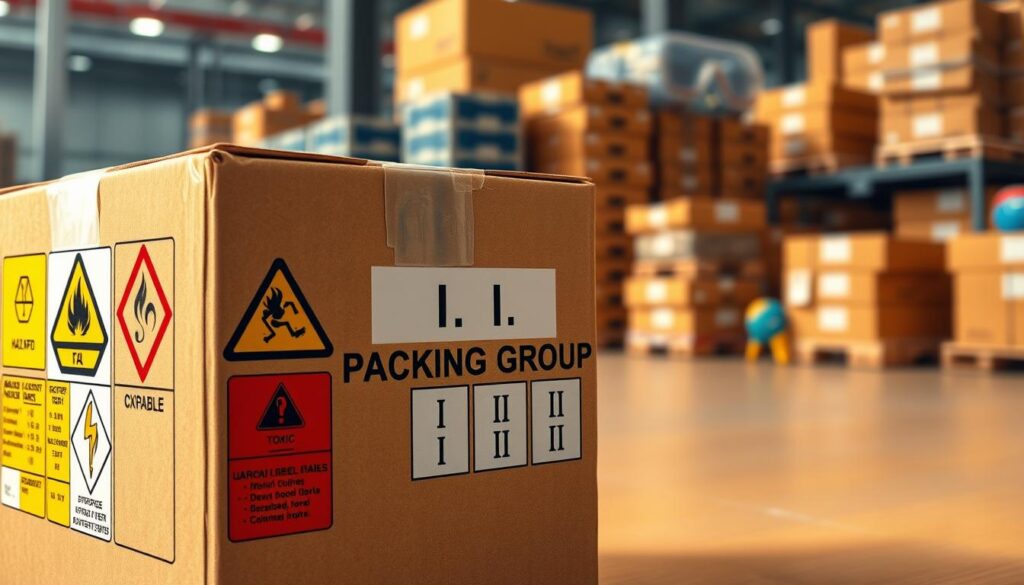
The packaging is the first part of the safety story. The box shouldn’t be stained, dented, or smell like the product. No leaks. No strange powders. If it looks like a toddler packed it, that’s a bad sign.
To understand the marks on your next shipment, use this guide. It turns confusing symbols into useful information.
| What You See on the Box | What It Actually Means | Your Inspection Check |
|---|---|---|
| “UN1993, Flammable liquid, n.o.s., 3, PG II” | The UN number, Proper Shipping Name, hazard class (3 for flammable liquid), and the packing group (II for medium danger). | Verify all elements are present, legible, and match the shipping paper. |
| A red-and-black diamond with a flame symbol | Hazard Label for Class 3: Flammable Liquid. The specific color and symbol are mandated. | Is it the correct diamond? Is it fully visible, not torn or covered? |
| “Orientation Arrows” (upward-pointing arrows in a rectangle) | This package must stay upright. Critical for liquids or pressure-sensitive items. | Are arrows present if needed? Is the box actually the right side up? |
| “This side up” or fragile stickers | Carrier instructions, not regulatory hazmat markings. Don’t confuse them. | Ensure these don’t obscure the required hazard labels or PSN. |
A missing or wrong label is not just a small mistake. It’s a safety risk. That box is a silent warning for an emergency you hope never happens. Make sure it’s telling the right story.
Shipping Papers, Emergency Response Info, 24‑hr number
Shipping papers are like checking your parachute before jumping. They might be annoying, but they’re life-saving. These documents tell everyone about your hazardous materials.
A Shipper’s Declaration for Dangerous Goods is like a chemical biography. It includes the air waybill, shipper and consignee details, and more. It’s like a hazmat’s passport, diploma, and medical chart all in one.
But, many teams struggle with the paperwork. It must have packing instructions and emergency response info. This info is specific to the substance, not general first aid.
The 24-hour contact number is also key. It’s not for customer service. It’s for emergency help, like if there’s a leak at night. If this number is missing, you’re stuck with Google while dealing with a spill.
As the consignee, you have the right to check these shipping papers. Make sure they match the truck’s contents. Verify the emergency info and contact number. This quick check can save a lot of trouble later.
For more on what makes these documents legal, check out the key requirements for hazmat shipping papers. Proper documentation means a controlled response, not chaos.
Remember, these papers are with the goods, not at headquarters. They’re in the cab or on the pallet. Treat them with care, like a live wire.
Air vs Ocean vs Ground: Key Differences (IATA/IMDG/DOT)
Think of hazmat transport regulations like professional sports leagues. The U.S. Department of Transportation (DOT) and its 49 CFR rulebook govern the gritty, ground-level game of trucking. The International Air Transport Association (IATA) runs the high-stakes, fast-paced arena of air cargo. The International Maritime Organization’s IMDG Code officiates the slow, strategic, container-sized theater of ocean freight.
Why should you, the procurement pro receiving the final pass, care which league your shipment played in? Because the markings, paperwork, and even what’s allowed on the journey change with the mode. A package arriving by air will tell a different story than one that rolled in on a truck.
For U.S. ground transport, 49 CFR is the undisputed law. It’s domestic, detailed, and deals with everything from trailer placards to driver training. When you see a truck backing into your bay, you’re looking at a DOT-regulated movement.
International air freight follows IATA’s Dangerous Goods Regulations (DGR). These rules are famously strict—often more so than the baseline ICAO technical instructions they’re based on. Weight limits are tighter. Packaging requirements can be more rigorous. It’s a game played at 30,000 feet, where the margin for error is famously thin.
Ocean shipments sail under the IMDG Code. This is the rulebook for the slow boat. It deals in massive container loads, specific stowage requirements (like “away from” heat sources), and distinct container placarding. An ocean container’s exterior tells a vivid, standardized story of what’s inside, meant for global ports.
So how do you, the receiver, play referee? You need to know which rulebook applied. The table below isn’t just a comparison—it’s your cheat sheet for regulatory forensics.
| Mode | Governing Rulebook | Key Receiver Clues | Philosophical Vibe |
|---|---|---|---|
| Ground (U.S.) | DOT / 49 CFR | Placarded trucks or trailers, specific hazmat labels on boxes, shipping papers in the cab. | Domestic, highway-focused, driver-centric. The “nationwide grind.” |
| Air | IATA DGR (based on ICAO) | Cargo Aircraft Only labels, limited quantity marks, often more numerous and specific hazard labels per package. | Global, expedited, ultra-risk-averse. The “high-altitude precision play.” |
| Ocean | IMO / IMDG Code | Large, standardized placards on containers, marine pollutant marks, special stowage codes on paperwork. | International, volumetric, slow-and-steady. The “containerized marathon.” |
This knowledge turns a random inspection into an informed one. A lithium battery shipment by air (IATA) will have different handling marks than the same battery by ground (49 CFR). A drum of chemicals arriving by sea (IMDG) should have a placard on the container that you’d never expect on a local delivery.
Understanding the mode provides the context. It answers the “why” behind the “what” you see on the box. Before you even check the shipping paper, ask the first, most critical question: How did this get here? The answer tells you which rulebook to open.
Lithium Batteries, Aerosols, Flammables: common pitfalls
If hazmat shipping had a hall of shame, lithium batteries, aerosol cans, and flammable liquids would be top offenders. They cause more problems than almost anything else. For teams, they are a triple threat of rules and physical danger.
Lithium batteries are the divas of dangerous goods, marked with UN 3480 or UN 3481. They power everything from laptops to medical devices. Their problem is “thermal runaway,” a chemical reaction that’s hard to stop once it starts.
Assuming a battery is safe is a big mistake. That prototype with a “not for transport” sticker? It’s a hazmat risk.

Aerosols, marked with UN 1950, are like tiny pressure vessels. A small dent can turn them into a hazard. Your team needs trained eyes to spot these dangers.
Flammable liquids, Class 3 materials, are volatile. The mistake? Accepting them in bad packaging. That expensive perfume in a glass bottle without cushioning? It’s a fire hazard.
These three troublemakers share common procedural pitfalls:
- Assuming “small quantity” equals “no risk”
- Overlooking damage during visual inspections
- Missing the connection between product function and hazmat classification
- Failing to verify that shipping papers match what’s actually in the box
The UN number is your first clue. Seeing “UN 3480” on a box means handle with care. It’s a warning in the global language of hazard communication.
Targeted training is key. Your team needs to know these materials in both safe and unsafe states. What’s proper packaging for lithium batteries versus the shortcuts?
Consider a shipment with “UN 1950” on the paperwork but loose cans in a big box. Without training, someone might just sign for it. With the right knowledge, they’d spot the problem and refuse the shipment.
The most dangerous assumption is “someone else checked this.” Training breaks that assumption. It empowers your team to prevent disasters.
Investing in this knowledge is worth it. It turns disasters into manageable routines. It makes your team active risk managers. In the world of dangerous goods, that’s survival.
Training & Contractor Responsibilities (Hazmat Employee Definition)
In the DOT’s eyes, your warehouse clerk handling lithium batteries is a ‘hazmat employee.’ So is the forklift driver moving a drum of solvent. This isn’t just a title. It’s a legal status with big consequences.
The definition is very broad: anyone whose job affects the safety of hazardous materials in transport. If they load, unload, handle, or prepare paperwork for dangerous goods, they’re in. No degree needed, but training is a must.
This training isn’t a one-time thing. It’s a regular update needed every two years. It’s like a software update for your team’s safety. The training has three key parts:
- General Awareness: The big picture. What are dangerous goods? Why do these rules exist?
- Function-Specific: This is where the rubber meets the road. It answers, “What do I need to do?” For a receiving clerk, this means knowing how to inspect an incoming package.
- Safety & Emergency Response: What to do when things go wrong. It’s the plan for a leak, spill, or fire.
Knowing your packing group is key. Teaching your team about PG I and PG III turns abstract rules into daily work instructions. It keeps your team alert and ready.
Now, about contractors. You can’t just pass off their compliance to them. The buck stops with you. If you hire a third-party to transport hazmat, you must ensure they’re trained and certified. Their mistakes are your mistakes. There’s no “I didn’t know” excuse.
DOT and IATA rules are clear: you need certified personnel. This isn’t just a rule. It’s a smart way to manage risks. Training your team well makes them your biggest asset. It’s the difference between hoping for the best and being ready for anything.
Receiving Inspections & Incident Escalation
Receiving hazmat is like a final exam you didn’t sign up for. The shipping papers are your only guide. It’s not just about checking boxes; it’s like forensic analysis on a loading dock.
When the truck arrives, your knowledge is put to the test. You need a formal plan to handle this situation. First, check if the shipping papers are there and complete. If something’s missing, that’s a warning sign.
Next, inspect the shipment like a crime scene investigator. Check if labels are correct and the package is in good shape. The packaging should match the shipping papers.
Also, look for special handling instructions. Some items need special care. These details are in the paperwork. Ignoring them can cause problems.
If something looks off, like a damaged package or wrong labels, don’t accept it. This is not being hard to please; it’s being careful. Move the package to a safe area right away.
Have a plan for when something goes wrong. Call the shipper and your safety officer at the same time. Take photos of any issues with the package or shipping papers.
Any problem with a shipment is considered an incident. It’s not just spills. Reporting issues helps avoid bigger problems later.
The shipping papers are key throughout this process. They show what should be there and how it should look. Knowing this helps you handle problems smoothly.
Remember, fines for not following rules don’t care about your good intentions. They focus on what actually arrived versus what the paperwork said. Your inspection is the last chance to stop hazmat from entering your facility. Make it count.
Transport Compliance Checklist
This checklist is like a hazmat decoder ring. It makes complex DOT and IATA rules simple. The five-step process is not just about paperwork; it’s your safety shield.
The physical inspection step is where theory meets reality. Checking UN numbers and labels is like detective work. It stops incidents before they start. Proper storage and segregation keep your warehouse safe.
But here’s the truth: a checklist without training is useless. Your team’s training turns steps into instinct. It’s the difference between following rules and understanding their importance.
Regular training makes your team experts. They can spot a mislabeled package from far away.
Digital tools like Manifestly’s Hazardous Materials Transportation Checklist make compliance easy. They turn tracking into a routine.
Master this system, and you’ve done more than check boxes. You’ve built a culture of safety and intelligence. That’s how you turn rules into a market edge.