
Swapping one chemical for another might seem easy. But, doing it without a careful process can lead to failure. It can miss what customers need and leave operations at risk.
Think of the telecom industry. Quick, unmanaged changes can leave customers without service. The same risk is true for your chemical supply chain.
The pharmaceutical world shows a better way. Change control is a detailed process for any change. It checks how changes affect quality, safety, and rules. Without it, you face big risks.
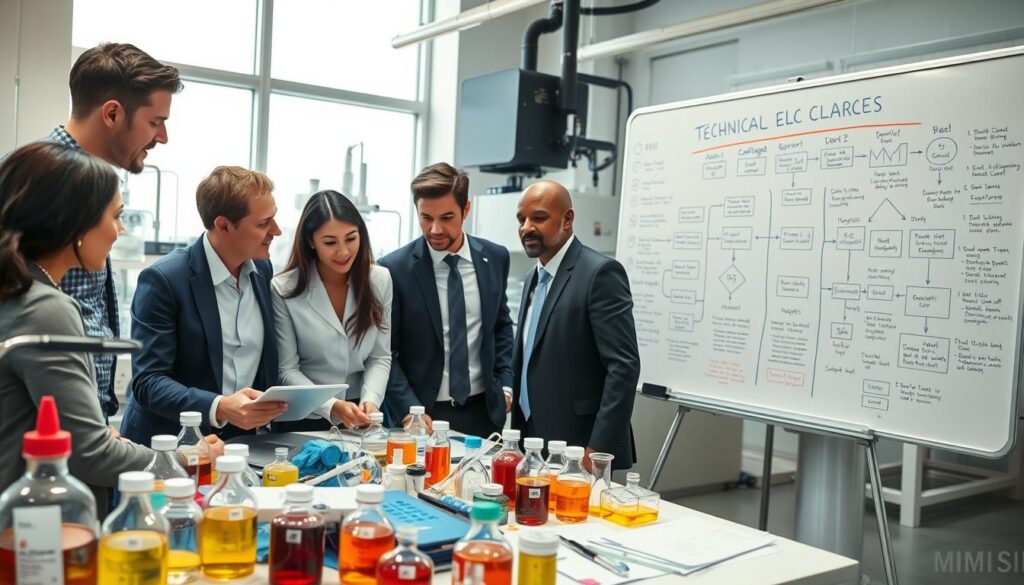
You can follow this careful approach. A structured method lets you make a formulation change with confidence. This way avoids costly shutdowns and quality issues. It also stops EHS violations and budget surprises.
Companies like Kilburn Chemicals know this. They focus on strict quality and innovation. This mirrors the need for a careful process. You can keep production going without a hitch. The aim is a smooth, shutdown-free move to a better product.
Why Uncontrolled Substitution Fails (Quality/EHS/Cost)
In the rush to find a new supplier, many companies skip the Management of Change (MOC) process. This leads to quality, safety, and budget failures. An uncontrolled toller change or material substitution is a big risk. It can harm your operations and profits.
A new chemical might look the same as the old one. But without a formal check, you might not know if it works. A structured MOC helps avoid these risks before they cost you a lot.
- Quality Failures: The biggest risk is quality problems. An untested material can lead to bad batches or off-spec products. It might not work right in your process. This can hurt your product’s safety and effectiveness. You’ll have wasted product, unhappy customers, and a damaged reputation.
- EHS Incidents (Environment, Health & Safety): A new chemical can bring unknown dangers. Without the right checks, you might not know how to handle it safely. This puts your team at risk and can cause environmental problems. A formal MOC helps manage these risks from the start.
- Cost Overruns: The savings from a new toller change can quickly disappear. You might face unplanned downtime, waste, rework, and fines. This makes your operation less efficient. A controlled process keeps you on track and within budget.
Uncontrolled changes harm every part of your operation. But a controlled MOC offers clear benefits. It ensures safety for patients and workers. It keeps you in line with regulations. Most importantly, it turns a crisis into a manageable project.
Seeing MOC as just paperwork is a mistake. It’s a powerful tool for your business. For a toller change, it protects your product, team, and profits. This formal process is about making your operations reliable and efficient.
By doing a thorough check, you move from fixing problems to leading proactively. You’re sure your supplier switch will add value without risks. This careful approach shows you’re a mature and strong operation.
Technical equivalency: function mapping, spec overlay, performance tests, accelerated aging
Looking beyond just specs is key. It’s about seeing how a material works in your process. This is the core of technical equivalency. It proves your substitute works just like the original, keeping your product quality high.
Finding a chemical copy isn’t the goal. It’s about matching the original’s key roles. The FDA backs this with its focus on process validation. They stress the importance of showing consistent results.
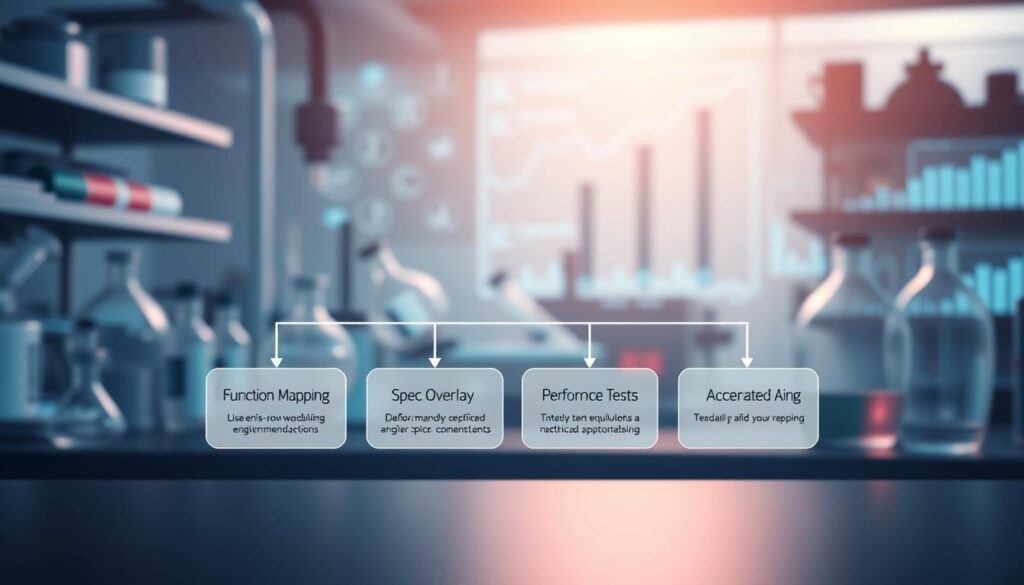
- Function Mapping: First, figure out what the material does, not what it is. Does it clean, lubricate, prevent corrosion, or carry something? Match each function to a specific need. This ensures the replacement fixes the right issue.
- Specification Overlay: Compare the technical data sheets side by side. Look at purity, viscosity, pH, particle size, and more. Spot any differences right away. Even small changes can affect things a lot.
- Performance Tests: This is where theory meets reality. Set up small tests that mimic your process’s conditions. Check if the substitute cleans, lubricates, or reacts the same way. This evidence is key.
- Accelerated Aging: It’s important to see how the substitute holds up under stress, like heat or humidity. Also, test how it works with other materials. This step checks if it will last and not cause problems.
Think of this as your technical checklist. Each step adds to your confidence. The function map shows what success looks like. The spec overlay warns of possible issues. Performance tests give real evidence. Accelerated aging checks for long-term reliability.
By using this method, you go from hoping a substitute works to knowing it will. You build a scientific case that meets quality standards and regulations. This turns finding a substitute into a controlled, confident engineering task.
Line‑trial protocol: batch size, holds, sampling, in‑process monitors, pass/fail KPIs
Creating a solid line-trial protocol turns a risky production change into a controlled event. It’s where lab-scale confidence meets the real world of manufacturing. A successful line trial proves your substitute chemical works as well as the original in your process.
The goal is simple: run a batch with the new material without stopping production. This is a key part of a formal change control process. For big changes, regulatory bodies like the FDA want validation studies, and a strong line trial is a key part of that.
Start by figuring out the right batch size. You don’t need to start with a full-scale batch right away. A smaller batch size is often smarter. It uses less material, cuts down on waste, and gives you useful data. It’s great for saving material when it’s in short supply.
Build strategic hold points into your schedule. These are planned pauses in production for testing. For example, you might test the pH and viscosity of a mixed solution before moving on. Hold points are your safety nets, stopping a whole batch if something goes wrong early on.
A good sampling plan is essential. Your data is only as good as your samples. Use enhanced sampling to get a true picture of the batch. The FDA says validated processes should have consistent yields, and sampling is how you check that during line trials. Take samples from different places and times during the run.
Set up real-time in-process monitors. These are your eyes and ears during the run. Watch things like temperature, pressure, and mix uniformity in real time. In-process controls, as the CGMP guidelines say, let you catch problems right away. If something looks off, you can adjust early and avoid a batch failure.
Most importantly, define clear pass/fail KPIs before the trial starts. These are the measurable criteria that will decide if the trial was a success. Everyone needs to agree on them before starting. Will success be a final product purity of 99.5% or higher? A reaction yield within 2% of the historical average? Setting these KPIs upfront makes the trial clear and objective.
The table below summarizes the core components of a complete line-trial protocol:
| Protocol Component | Primary Purpose | Key Considerations & Examples |
|---|---|---|
| Batch Size | To generate valid production data while minimizing risk and material use. | Use a reduced run (e.g., 25-50% of full scale). Ensure it’s large enough for statistical significance and to test equipment interactions. |
| Hold Points | To provide opportunities for quality verification before further processing. | Place holds after critical unit operations (e.g., post-mixing, pre-heating). Define tests (assay, pH, density) and acceptable ranges for each hold. |
| Sampling Plan | To ensure test samples are truly representative of the entire batch. | Use stratified sampling (beginning, middle, end of run). Specify sample size, location, and frequency. Document chain of custody. |
| In-Process Monitors | To provide real-time data for immediate process control and drift detection. | Monitor parameters like temperature, pressure, flow rate. Set clear alarm limits. Ensure data is logged and reviewed in real time. |
| Pass/Fail KPIs | To establish objective, pre-defined criteria for judging trial success. | KPIs may include final product specs, yield, throughput rate, or waste levels. All must be measurable and documented before the run. |
By following this structured approach, your line trial becomes a powerful verification tool, not a gamble. You move forward with data-backed confidence, ensuring your substitution maintains quality, safety, and cost targets. This protocol is your roadmap to a seamless transition.
Communication plan: internal stakeholders, customer notice, labeling/SDS updates
Good communication is key to a successful material change. It connects the lab to the loading dock. A solid communication plan keeps everyone on the same page. It makes sure you meet regulations and keep customer trust.
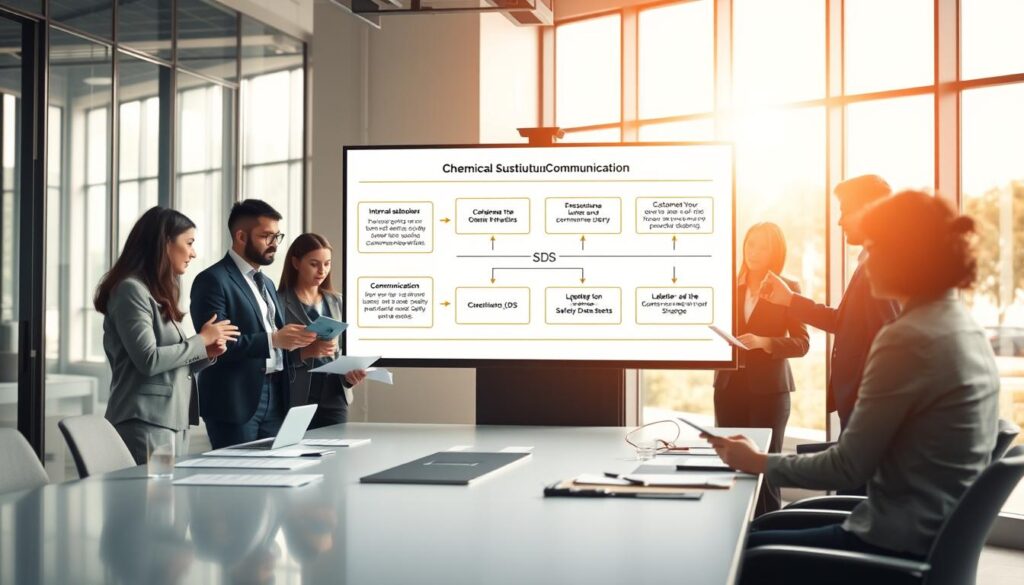
Effective change control brings teams together. It turns a technical task into a team effort. Your plan should list all internal stakeholders early.
Important groups include Research & Development, production teams, Environmental Health & Safety, procurement, quality assurance, and regulatory affairs. Each group has its own concerns. Production needs to adjust procedures. EHS must review new hazards. Procurement has to secure supply. Quality assurance validates the change. Regulatory affairs handles any required regulatory notification.
Working together from the start avoids costly mistakes. Regular meetings keep the project clear. This teamwork makes the transition smooth.
Customer notice needs careful timing and clear messages. You must decide when and what to tell your clients. For minor changes, notification might come after. For big changes, like a new toll manufacturer, tell them early.
Your message should explain the change. Mention any benefits, like better performance or reliable supply. Make sure customers know quality and safety standards are the same. Be ready to answer questions about new labeling or SDS updates. Open communication keeps trust and prevents surprises.
Updating all documents is essential. It’s not just paperwork—it’s a legal and safety must. Every document that mentions the old material needs to be updated.
Key documents to update include Safety Data Sheets (SDS), product labels, technical data sheets, and internal specifications. An outdated SDS is a safety risk. Wrong labeling can lead to fines or misuse. Specs must match the new material for quality.
Assign someone to handle each update. Set deadlines. Make sure quality and regulatory affairs approve all changes. This method completes your substitution project.
A detailed communication plan turns a risk into a success. It aligns your team, informs customers, and keeps documents accurate and compliant. Clear, proactive communication protects your process, partnerships, and reputation.
Post‑implementation review and rollback triggers
Changing something is just the start. You need to make sure it works well over time. A good post-implementation phase checks if the change is really helping and keeps your operations safe.
Plan a Post-Implementation Review after a few full-scale batches. This isn’t just a quick chat. It’s a deep dive into the data, comparing what happened in real life to what you hoped for.
Did the new material make things better or worse? Is the product quality up to par? This review is where you officially say the change was a success.
Checking if a change works is key to making things better over time. It also helps see if customers like the new stuff.
Your review should answer big questions:
- Did the change save money or make things more efficient?
- Is it causing problems with other products or processes?
- Are workers and quality teams facing new issues?
It’s also vital to set up rollback triggers before you review. These are clear rules that say when to go back to the old way. They’re your last line of defense.
Common rollback triggers include:
- A big increase in customer complaints about the change.
- Tests show the change isn’t stable.
- The change keeps failing to meet important KPIs.
- A sudden EHS issue.
Having these triggers set up ahead of time makes things clear in a crisis. It gives a clear path back to the old way and keeps your product safe. This builds trust with your team and customers.
The post-implementation review and rollback plan wrap up your substitution project. They turn a one-time change into a chance to learn and keep things running smoothly. Getting final KPI acceptance shows you did a great job.
Templates: MOC form and trial report
Standard tools are key to making a substitution plan work. A detailed MOC form is at the heart of the change process. It holds the change details, who started it, an impact assessment, and approval signatures.
Using software with workflows makes this Management of Change (MOC) process smoother. It keeps a clear record from start to finish.
The trial report template is your proof. It outlines the protocol, data, and results. It ends with a summary and approval, showing the new chemical works as needed.
These templates turn your project into a controlled process. They make sure every step is followed, show you’ve done your homework, and guide your team for future changes. Using these tools helps you make substitutions quickly and confidently.