

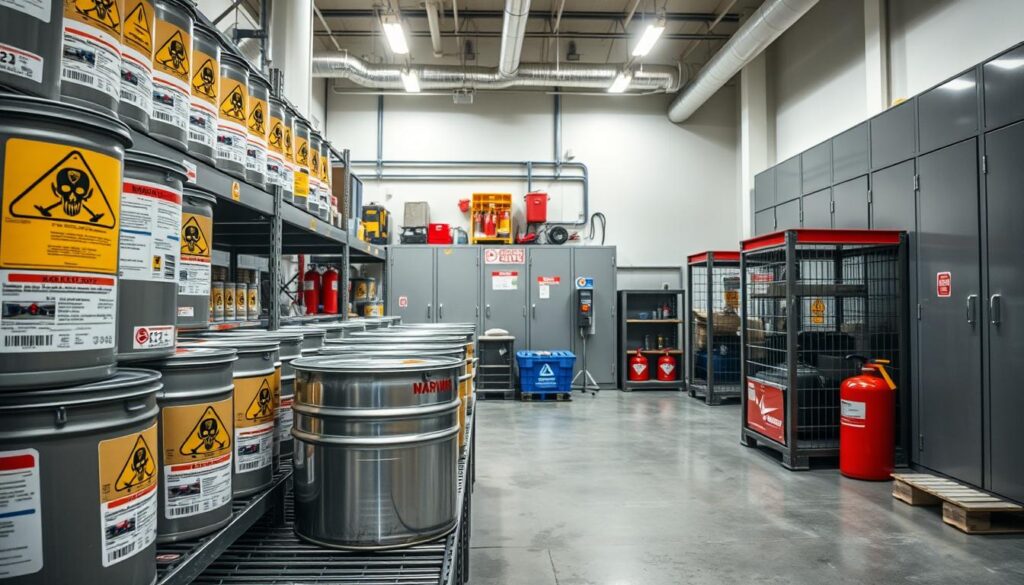
Meet the holy trinity of lab headaches. These aren’t your average chemicals. They’re the dramatic divas of the storage cabinet, capable of turning a routine day into a full-blown incident report with one wrong move.
In simple terms, we’re talking about substances that cause irreversible damage. This includes classic acids like sulfuric, caustic bases, and aggressive oxidizing agents. They don’t just stain; they consume.
Why does their storage feel like a high-stakes game of chemical chess? Because improper handling isn’t a simple spill. It’s a direct ticket to chemical exposure, fire, or even explosion. The stakes are skin, surfaces, and safety.
This guide isn’t another dry safety manual you’ll ignore. Consider it your intellectual armor. We’re blending analytical rigor with a dash of wit to dissect the protocols that separate a smooth-running lab from a scene in a cautionary tale. Let’s get smarter about where we put our most volatile friends.
Hazard overview and typical use cases
Imagine a chemical storage cabinet as a dysfunctional family reunion. Here, acids, bases, and oxidizers all try to get attention. Each has a unique talent for causing damage.
Corrosives are like the bullies. Acids, like hydrochloric and nitric acid, can etch metal and cause severe burns. Their alkaline cousins, like caustic soda, can turn flesh into soap. These chemicals can also harm your lungs with their fumes.
Toxics are the silent assassins. They cause damage over time without making a big scene. You might not feel the burn right away, but the damage is real.
Oxidizers are like the eager pyromaniacs. They don’t burn on their own but seek fuel to start a violent reaction. This is why materials compatibility is so important.
Your typical use case isn’t a clean warehouse. It’s a busy university lab where students work with dangerous chemicals. It’s also an industrial plant where different chemicals are stored together.
The golden rule? Segregation is not a suggestion. Storing an oxidizer next to a flammable solvent is dangerous. It’s like setting up a short, exciting, and unwanted experiment. The storage strategy must respect the dangers of these chemicals.
So, meet your adversaries. The metal-eaters, the flesh-dissolvers, and the fire-starters. Knowing them is the first, and most critical, step in keeping the peace.
Cabinet selection: acid‑resistant linings, poly trays, vent options
Think of your chemical storage cabinet as a specialized suit of armor. It needs to protect against acid, not just swords. It’s not about finding the shiniest box. It’s about matching defenses to chemical threats. For more on this, check out our guide to selecting the right chemical storage.
Cabinet Selection: The Critical Components
A standard metal locker can’t protect against concentrated sulfuric acid. It’s like using a paper umbrella in a hurricane. A proper acid cabinet is your first defense, with three key elements.
The lining is not paint. It’s a baked-on epoxy or polyester coating to resist corrosion. It’s like a non-stick coat for chemical spills. When hydrochloric acid spills, this lining keeps the cabinet strong. Standards like ULC/ORD C1275 and FM Global certify these linings as functional barriers.
The secondary containment is polyethylene trays. They’re not just shelves. They catch spills. If a bottle leaks, the tray contains it. This prevents a big mess.
Ventilation is also key. Labs often get this wrong. The question is “what am I storing?” For flammables, vents might be closed. But for toxics or volatiles, proper venting is essential.
We’re talking about a system with dual vents and flash arrester screens to prevent flames. These vents connect to your lab’s exhaust. It’s not just plumbing. It’s a system that removes vapors before they harm your workspace.
An acid cabinet without these features is just a metal box. The lining, trays, and venting work together. They turn passive storage into active risk management. Choosing the right cabinet means your first line of defense is strong.
Do not mix: nitric isolation; oxidizers away from organics and metals
Your chemical storage area is like a high-stakes diplomatic summit. Certain attendees can’t be seated together. The key rule is oxidizer separation. Ignore this, and you invite a quick, violent reaction.
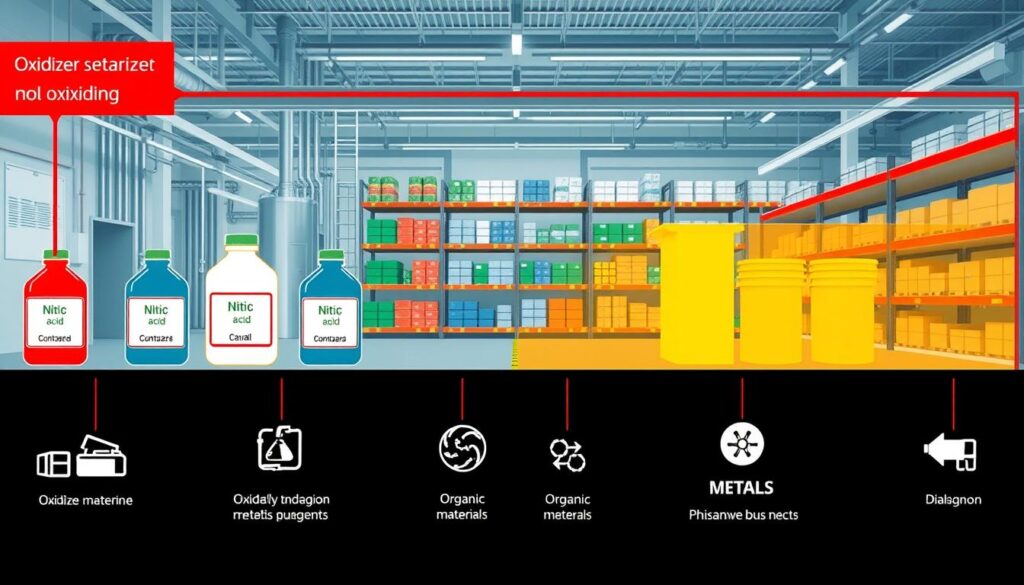
Oxidizers are the troublemakers in the chemical world. They add oxygen or take electrons, causing reactions in stable materials. Storing them with the wrong neighbors is like setting off fireworks. It’s all about keeping things peaceful by keeping them apart.
The Nitric Acid Anomaly
Nitric acid, like the fuming red kind, needs its own space. It’s not just a matter of preference; it’s a must. This acid is both corrosive and an oxidizer.
Keep it with other acids, and you risk dangerous gas. Near organics, it can start a fire. It’s not a suggestion; it’s a rule. Treat it like a VIP needing its own secure area.
All oxidizers, not just nitric acid, see lab materials as fuel. Solvents, paper towels, and even wood become targets. The result is explosive.
Flammable acids and solvents can’t be together. Acids and caustics must be separated. Most importantly, keep oxidizers away from anything organic, flammable, or combustible. It’s a strict rule.
To understand these rules, think of demilitarized zones:
| Chemical Group | Keep Away From | Potential Reaction |
|---|---|---|
| Nitric Acid (Conc.) | Other acids, organics, metals | Toxic gas release, fire |
| Oxidizers (e.g., Peroxides) | Organic solvents, combustibles | Rapid combustion, explosion |
| Flammable Acids | Flammable Solvents | Enhanced fire risk |
| Strong Acids | Strong Bases (Caustics) | Violent neutralization, heat |
Each group has a natural enemy. Your storage strategy is like chemical diplomacy. Isolate oxidizers, give nitric acid its own space, and keep acids and bases apart.
This oxidizer separation rule isn’t about fear. It’s about planning ahead. By creating these buffers, you’re not just storing chemicals. You’re ensuring a safe and stable environment.
Local exhaust near open‑use benches/dispense stations
Handling bases isn’t a spectator sport. It’s where hidden dangers become airborne. Your base storage plan is like a ballet. But the real show starts when you handle the bases.
Storing sodium hydroxide in a sealed cabinet is safe. But opening the bottle at an open bench invites caustic vapors into your air. Local exhaust ventilation (LEV) acts as your bouncer, keeping harmful chemicals out.
The Engineering Guardian You Didn’t Know You Needed
A good LEV system is more than a fan and duct. It’s a strategic vacuum that catches contaminants at their source. Imagine a dedicated station for acids or bases. A well-designed capture hood acts like a goalie, blocking vapors.
Mechanical exhaust ventilation is a must for handling toxics. Rooms with corrosive vapors need good ventilation. But local exhaust is the precise tool within that room. It’s the difference between a general air change and a targeted vacuum.
The key is capture velocity. Too weak, vapors escape. Too strong, it disrupts work. It’s a delicate balance. For bases that generate heat and vapor, this control is essential. It makes a hazardous task routine and controlled.
| Ventilation Type | Best For | Capture Efficiency | Installation Considerations |
|---|---|---|---|
| Capture Hood (Canopy) | Open bench pouring, bulk transfers | High for rising warm vapors | Must be close to source; affects overhead clearance |
| Slot Hood | Dispense stations along sink edges | Excellent for low-volume, continuous operations | Integrated into bench design; requires specific ductwork |
| Downdraft Table | Weighing powders, mixing that generates dust | Superior for particulates and heavier vapors | More complex maintenance; higher initial cost |
| Enclosed Dispensing Station | High-risk acids/bases, toxic solvent transfers | Maximum containment (near 100%) | Space-intensive; may slow workflow |
Choosing the right system is like picking the right character in a game. Each has special moves for different tasks. A slot hood is stealthy for small tasks. The downdraft table is strong for heavy tasks. You wouldn’t use a sword for a dragon, right?
Placement is key. The hood should be close to the worker. OSHA and ANSI guidelines talk about “the zone of capture.” Missing that zone means just moving air.
This isn’t just about following rules. It’s about making a smart choice. A proper LEV system near your base storage and handling area is an investment in safety. We want breakthroughs, not chemical exposure incidents.
Eyewash/shower placement and flow verification
Putting an eyewash shower in the right spot is key. It’s not about being easy to find. It’s about making sure people can get there fast, even if they can’t see. The goal is to get there in ten seconds.
There should be no obstacles. No chairs, carts, or closed doors. Storage areas must always be clear. This path is a lifeline.
Testing the eyewash is important. You should do it every week. Make sure the water flows well, but not too hard. The water should be cold enough to shock the system, but not so cold it hurts.
The protocol of immediate decontamination
For eye splashes, you need to rinse for 20 minutes. For skin, it’s 15 minutes. Time starts as soon as you get splashed.
This isn’t a quick clean-up. It’s a long process. Make sure the equipment works right. Test it weekly to be sure.
| Feature | Emergency Eyewash | Emergency Shower |
|---|---|---|
| Placement Rule | Within 10-second unobstructed path | Within 10-second unobstructed path |
| Required Flow | 0.4 gallons per minute (gentle) | 20 gallons per minute (copious) |
| Water Temperature | Tepid (60-100°F) | Tepid (60-100°F) |
| Testing Frequency | Weekly activation | Weekly activation |
| Minimum Rinse Time | 15 minutes continuous | 20 minutes continuous |
This table is more than a checklist. It’s a guide for keeping people safe. The difference between a gentle eyewash and a strong shower is big.
What does your eyewash shower say about your lab’s safety? Is it just decoration or a real safety net? Its readiness shows what you value most. When disaster strikes, it’s the only thing that matters.
Shelf hardware: coatings, anti‑tip bars, lip heights
In the world of chemical storage, shelves are key. Their hardware keeps everything safe and sound. It’s all about the little things that make a big difference.
Good shelf hardware works quietly and always. It’s the backbone of your storage setup. Let’s look at the three main players: the coating, the anti-tip bar, and the lip.
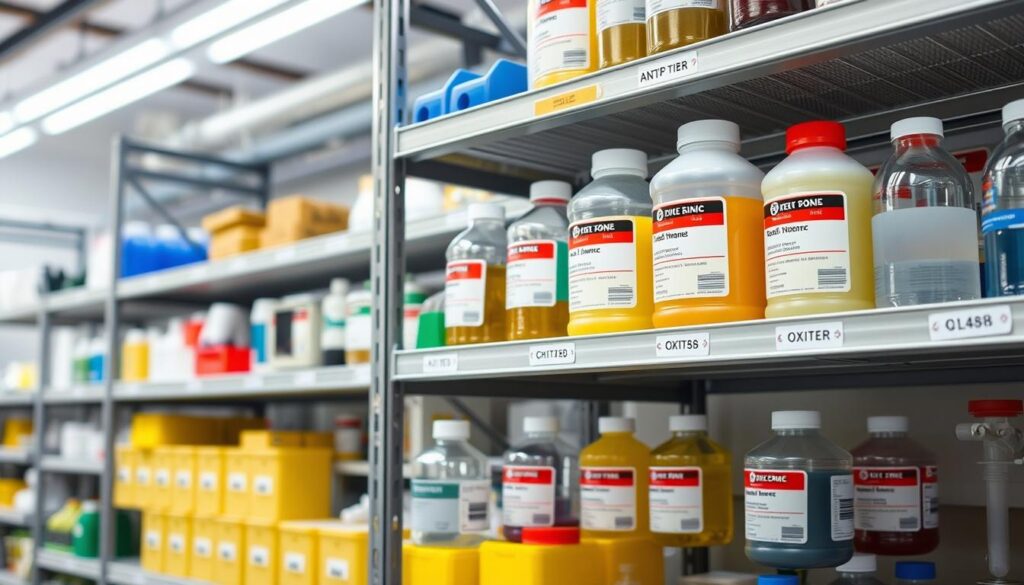
The Coating: Your First Line of Defense
The shelf coating is like a knight’s armor. Without it, a steel shelf can’t handle harsh chemicals. It’s all about materials compatibility at a tiny level.
Epoxy or powder-coated finishes are top-notch. They protect against most chemicals. It’s not just about looks; it’s about keeping things safe.
Anti-Tip Bars: Preventing the Domino Effect
Anti-tip bars are like bouncers. They stop bottles from falling and causing more trouble. It’s a simple yet effective solution.
One falling jug can knock over many others. The anti-tip bar stops this disaster chain. It’s a small price for big safety benefits.
Lip Heights: The 2-Inch Containment Berm
If a container spills, where does it go? The lip height keeps it contained. A 2-inch (5 cm) edge is essential for safety.
This lip turns shelves into safety zones. A spill stays on the shelf, not on the floor. Rim guards that meet this height are a must for dangerous chemicals.
Remember, shelves must be level and stable. A wobbly shelf is a safety risk. For extra safety, bungee cords or straps can hold heavy containers in place.
| Hardware Feature | Critical Spec | Primary Function | Common Pitfall |
|---|---|---|---|
| Coating | Epoxy or Powder-Coated | Provides chemical resistance; ensures materials compatibility | Using standard paint that degrades on contact |
| Anti-Tip Bar | Full-width front barrier | Prevents forward tipping and container domino effect | Skipping it to maximize shelf space |
| Lip Height | Minimum 2 inches (5 cm) | Contains spills on the shelf; prevents fall-through | Using “lip-less” or low-profile shelves for liquids |
| Shelf Stability | Level and vibration-resistant | Provides a secure, immobile platform | Installing on uneven floors without adjustment |
Choosing the right shelf hardware is a big deal. It’s not just about checking a box. It’s about making a smart choice for lab safety. When you pick epoxy-coated shelves with 3-inch lips and anti-tip bars, you’re doing more than buying furniture. You’re setting up silent guardians for your materials compatibility plan. They work all the time, asking only for a bit of planning when you buy.
Small‑quantity lab packs vs bulk drums—different rules
Using a 100mL bottle and a 20L drum the same way is like wearing a bike helmet for a motorcycle. It’s a big mistake. When you move from small amounts to big ones, you enter a new legal area. You need to change how you store things.
There’s a path for lab workers and another for warehouse managers. Mixing these up can lead to big problems.
The Lab Pack Playbook: Bench-Top Chemistry
Lab packs are for everyday research. They include small amounts of chemicals like acetic acid. A acid cabinet is key for keeping things safe.
The rules for lab packs are strict. You can’t mix certain chemicals together. It’s like following rules in a neighborhood.
Fire codes also have rules. For example, you might be allowed up to 500L of certain chemicals in a lab cabinet. But, these rules are strict.
The Bulk Drum Doctrine: Industrial-Scale Rules
A 55-gallon drum is a big deal. It’s not just a big bottle. It’s a hazmat shipment.
Storing big drums needs special rules. You need a dedicated room with spill decks. These decks can hold more than the biggest container.
Big drums mean big risks. A spill can turn into a disaster. The rules are based on safety, not being hard.
So, you need two plans. One for small amounts in a acid cabinet. Another for big drums. Mixing these up is a big mistake.
Spill Kit Contents Tuned for Acids/Caustics/Oxidizers (High Level)
A generic spill kit is like a butter knife in a gunfight—it’s not enough. That old “chemical” kit in the corner? It’s as useful as a universal remote that doesn’t work. You need a specialized kit, not a general one.
Think of it like fighting a grease fire with water. The wrong sorbent or neutralizer can make a small leak worse. The goal is to chemically disarm the threat, not just soak it up.
Your Chemical Countermeasure Arsenal
For acids, use a basic neutralizer like sodium bicarbonate. It turns dangerous acids into harmless substances. You also have acid sorbents made for this purpose.
Caustics need a weak acid neutralizer, often citric-based, to lower the pH safely.
Oxidizers need special care. Using an organic sorbent on a spill is like adding fuel to a fire. Only use an inert sorbent like vermiculite or clay.
Your kit must include the right tools and PPE for safe use. This includes acid-resistant gloves and a full-face shield. Knowing what to do before panic sets in is key. Spill response procedures show that preparation is half the battle. Secondary containment is important, but your kit is your backup.
| Hazard Type | Recommended Kit Contents | What to Absolutely Avoid |
|---|---|---|
| Acids (e.g., HCl, H₂SO₄) | Sodium bicarbonate neutralizer, acid-neutralizing sorbent pads, pH indicator strips. | Water for dilution (for strong acids), basic sorbents not rated for acids. |
| Caustics/Bases (e.g., NaOH, KOH) | Citric acid or other weak acid neutralizer, caustic-rated sorbents. | Strong acid neutralizers (causes violent reaction), simple absorption without neutralization. |
| Oxidizers (e.g., Peroxides, Nitrates) | Inert sorbents (vermiculite, clay), non-combustible cleanup tools. Key Principle: Oxidizer Separation. | ANY organic/flammable sorbent (kitty litter, paper towels), combustible containers. |
Check if your kit is right for your needs. A specialized kit can turn a disaster into a manageable situation. It’s not just about being prepared; it’s about being effective.
Routine inspections and waste segregation cues
Your lab setup is perfect at first. But time can turn it into a mess. Routine inspections are like your lab’s immune system. They keep the chaos at bay.
The Annual Check-Up Isn’t Optional
An annual inventory review is not just a friendly check. It’s a must to find any problems. Look at every shelf in your storage area. Check for damaged labels, swollen drums, and dangerous mix-ups.
Don’t forget to test your emergency gear. Each eyewash shower needs a weekly test. Make sure the path is clear and the water flows well.
Waste segregation is also key. It’s your last defense. Mixing acidic and alkaline waste can lead to a big mess. Always label and separate waste properly.
Inspections catch small issues before they become big problems. Waste segregation prevents major disasters. This is how you keep your lab in order every day.