


The receiving dock is key for any manufacturer. A formal inspection process for raw materials and components is the first defense. It stops bad items from getting into production.
This careful review protects your brand and keeps costs down. It makes sure you meet standards. A good process turns a weak spot into a strong point.
Today’s quality systems need fast checks. They link a supplier’s Certificate of Analysis (CoA) to samples and physical checks. Verification of this data quickly is the aim.
This method uses acceptance sampling for smart decisions. Plans based on the Acceptance Quality Limit (AQL) are scientific. They find a balance between being thorough and fast.
For those leading operations and procurement, a smooth process is a big advantage. It makes your supply chain reliable and keeps costs in check. It turns a simple check into a way to protect your brand.
Receiving Right the First Time
Before starting any sampling plan, a detailed check is needed. This initial step is key to quality. It makes sure only the right materials move forward.
This process is a series of checks. Each one confirms the previous step was correct. Here’s how receiving staff follow this important process.
- Receipt and Documentation Review
Staff first compare the shipment with three important documents: the purchase order, the supplier’s packing list, and the Certificate of Analysis. They check if everything matches. If not, they stop the process.
They also check if the lot number and production date on the CoA match the labels. This ensures the test data is for the right material.
While checking the documents, staff also inspect the shipment. They look for damage, contamination, or issues from transport. Labels must be clear and correct.
They also check the production date on labels against their own rules. This is the first real check against the paper record.
- Segregation and Sample Identification
Right after receiving, all material goes to a quarantine area. This keeps it safe until it’s approved. It’s a critical step.
Staff also start picking out samples for the retain samples program. They choose which ones to keep for later.
This whole process is recorded in a log. The log notes the date, time, who did it, and any first thoughts. It helps track everything from the dock to the lab.
When these steps are done right, materials are ready for testing. A good receiving process helps avoid delays and mistakes later on.
Risk‑based inspection levels; when to skip vs tighten sampling
How often you inspect materials should match how important they are to the product. Inspecting everything the same way wastes time on parts that don’t matter much. A risk-based approach makes sure you check the most important parts more closely.
This method puts materials into groups based on how bad a defect would be. It looks at how a defect could affect safety, how well the product works, and if it follows the rules.
- High Risk: Items like active ingredients in medicines, packaging, or parts that need to be clean. If these fail, it could hurt people or mean the product has to be recalled.
- Medium Risk: Stuff that affects how well the product works or lasts, like additives or packaging. While not as serious, a defect here could mean the whole batch is rejected.
- Low Risk: Things that don’t really touch the product, like extra packaging or office supplies. If these fail, it doesn’t really affect the product’s quality.
Standards like ANSI/ASQ Z1.4 help guide this approach. They offer rules for when to inspect more or less. The goal is to use these rules wisely based on the material’s risk level.
Deciding when to change inspection levels is important. For low-risk items from a trusted supplier, you might not need to inspect as much. This saves time and money.
But, if there’s a risk, like a new supplier or a quality problem, you might need to inspect more. This means taking bigger samples or being more strict about what’s acceptable.
How well a supplier does over time matters a lot. If they keep doing well, you might not need to inspect as much. But, if they fail, you go back to checking more closely. This keeps everyone on their toes.
What you find during inspections helps manage the supplier’s quality. If a supplier keeps having problems with important items, it’s time to start a CAPA process. This way, the inspection plan helps catch problems and keep an eye on things.
In the end, using a risk-based approach makes inspections smarter. It makes sure you’re focusing on the parts that really matter. This smart use of ANSI/ASQ Z1.4 makes things more efficient and keeps the product safe.
ANSI/ASQ Z1.4 quick primer; lot size → sample size → accept/reject numbers
Acceptance sampling under ANSI/ASQ Z1.4 has three steps: find the lot size, decide on the sample size, and set accept/reject criteria. This standard uses a formal process for attribute acceptance sampling. It classifies items as either conforming or non-conforming, making decisions more precise.
The AQL, or Acceptable Quality Limit, is key in this method. It shows the highest percentage of defective items a lot can have and pass. For instance, an AQL of 1.0% means a lot with 1% defects is likely to be accepted.
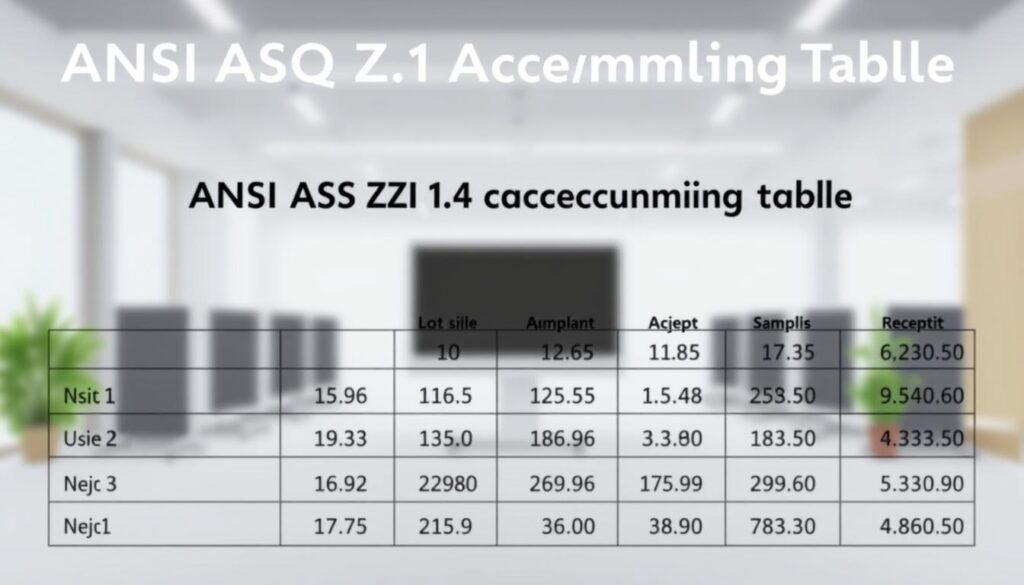
Choosing a stricter AQL, like 0.65%, means fewer defective items are accepted but more samples are inspected. A more lenient AQL, like 2.5%, means less effort in inspection but more risk. This balance is what the standard offers.
The standard uses tables in ANSI/ASQ Z1.4 for practical use. The steps are always the same:
- Find Lot Size: Determine the total number of items in the shipment lot (e.g., 150 cartons).
- Determine Sample Size: Match the lot size to a letter code using the standard’s tables. Then, find the required number of units to inspect based on the AQL.
- Apply Accept/Reject Numbers: The same table gives the accept (Ac) and reject (Re) numbers. If the number of found defects is ≤ Ac, the lot passes. If defects are ≥ Re, the lot fails.
This table shows a simplified example for general inspection Level II:
| Lot Size | Sample Size Code | Sample Size (n) | AQL 1.5% Ac / Re |
|---|---|---|---|
| 91 to 150 | F | 20 | 1 / 2 |
| 151 to 280 | G | 32 | 2 / 3 |
| 281 to 500 | H | 50 | 3 / 4 |
In the first row, for a lot of 150 units, you inspect 20. You accept the lot if you find 0 or 1 defect. You reject it if you find 2 or more defects. This clear pass/fail criteria eliminates ambiguity.
Using ANSI/ASQ Z1.4 standardizes incoming inspection across an organization. It prevents both wasteful 100% inspection and the risk of under-inspecting critical materials. For QA managers, it provides a defensible, statistically valid basis for lot disposition decisions.
Visual/Label Checks, CoA Spec Match, Spot Tests (ID/FT‑IR, KF)
Incoming inspection protocols turn supplier documents into solid evidence. They use visual checks, specification matching, and analytical tests. This ensures every lot meets quality standards before it’s released.
The first step is a detailed visual and label check. People look for damage, contamination, or bad packaging. They also check labels against the purchase order and material specs.
Important label details include the material name, lot number, maker info, and expiration date. Any wrong or unclear info means the item is held. This quick check spots obvious problems before deeper tests.
The next step is the Certificate of Analysis (CoA) specification match. It’s more than just a yes or no check. Quality teams compare the CoA to the approved spec sheet line by line.
They check each assay value, its units, and the test method (like ISO or USP). This confirms the supplier followed the right testing protocol. It also checks if the CoA lot number matches the physical labels for traceability.
The final step is confirmatory spot tests. These quick tests check important material features. FT-IR spectroscopy is used to confirm identity by comparing spectra.
Karl Fischer (KF) titration is used for moisture content in sensitive materials. Other tests might check pH, density, or function. The aim is to verify key CoA claims with independent data.
These steps—visual checks, CoA review, and spot tests—turn a supplier’s claim into solid, defendable quality evidence. This thorough process is key to controlling incoming materials effectively.
Quarantine, disposition, NCR + CAPA flow
A failed inspection is just the beginning. It starts a detailed process to fix and prevent future issues. This ensures that any non-conforming materials are handled properly. It keeps production safe and helps suppliers get better.
The first step is to separate the suspect material. It must go to a quarantine area. This area keeps it away from good stock. It’s important to label it clearly to show it’s in quarantine (or quality hold) status.
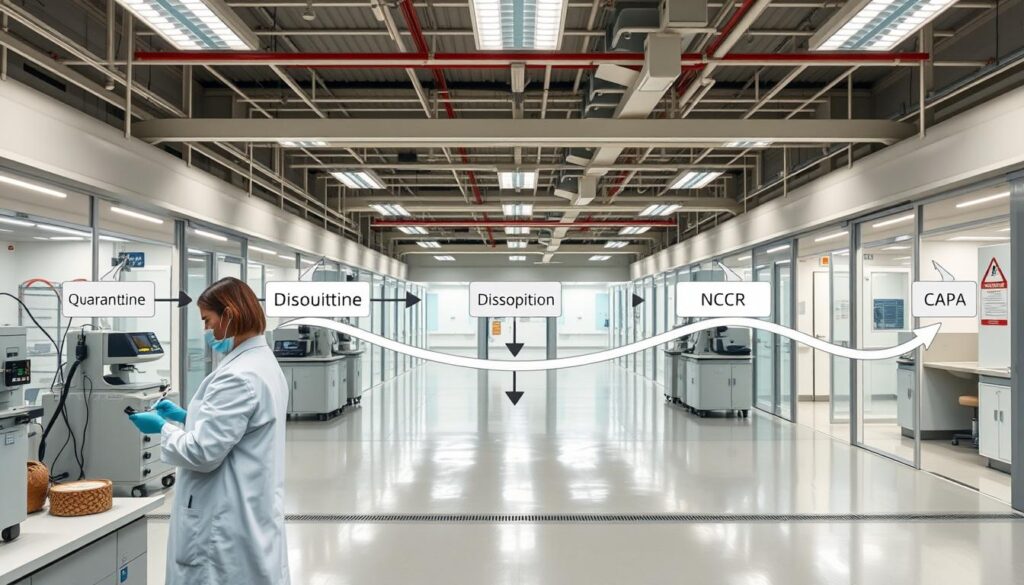
After it’s isolated, a decision on what to do with it is made. There are three main options:
- Return to Supplier: This is common for serious defects. It means the supplier pays for and fixes the problem.
- Rework: This is for issues that can be fixed in-house without hurting the final product.
- Use Under Concession/Deviation: This is for small, non-critical problems. The material is used with special permission.
Every issue, no matter the outcome, gets a Non-Conformance Report (NCR). This document keeps a detailed record. It includes inspection results, photos, lot numbers, and a detailed description of the problem.
The NCR starts a process to fix the issue. Quality Assurance looks at the report. They decide how serious it is and what needs to be done. This starts the Corrective and Preventive Action (CAPA) process.
The CAPA process has three steps:
1. Containment: This is the first step to stop the problem. It includes putting the material in quarantine and holding other lots.
2. Corrective Action: This step fixes the immediate problem. It often involves the supplier, who must find and fix the root cause.
3. Preventive Action: This step aims to prevent the problem from happening again. It might mean changing the supplier’s process, updating specifications, or doing supplier audits to check for improvements.
The goal of this process is to hold everyone accountable and keep getting better. It turns a failed inspection into a chance to improve the whole supply chain.
Retain sample program and documentation templates
A formal retain sample program keeps physical evidence safe after an inspection. It makes sure we can trace everything back and helps with future disputes. It also acts as a key reference for material quality.
It’s important to keep enough for further testing. Containers need to be sealed and labeled well. Labels should have the lot number, date, and who inspected it. The WHO guidelines for sampling help with these steps.
Documentation templates make this process easier. A Retained Sample Log tracks who had the samples. A Deviation Trend Log records any issues found. These templates help keep everything clear and organized.
With the samples and their records, we build a knowledge base. This data helps us understand supplier trends. It gives us solid evidence for making things better. A good program turns inspection results into useful information for improving the supply chain.