

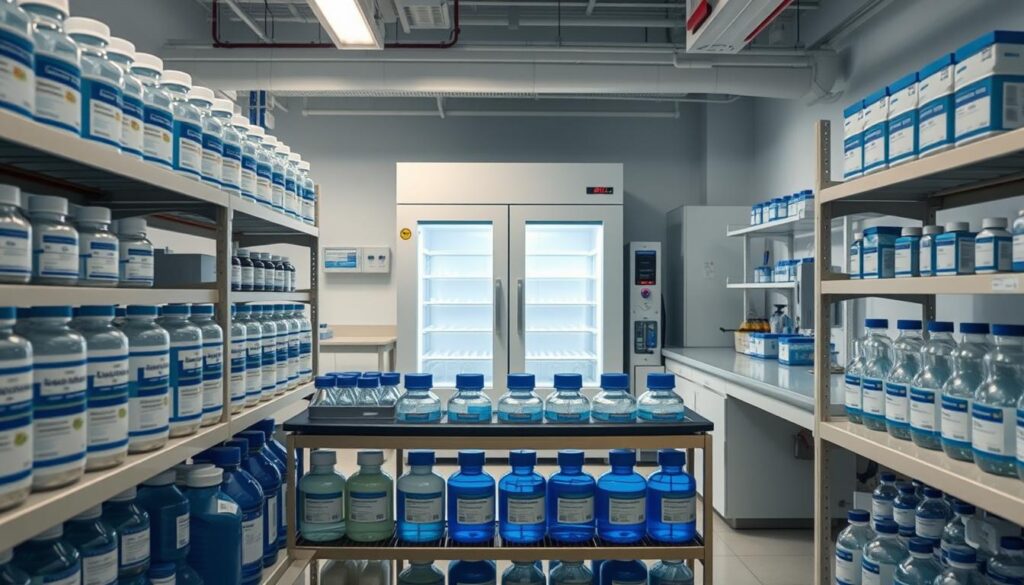
Some materials in your lab are like Hollywood divas. They can get upset if their environment is wrong. This could ruin your whole project.
Toluene gets upset if it’s too warm. It turns into vapor, wasting your product and making a mess. Hydrogen peroxide also needs the right temperature. If it’s too warm, it builds up pressure and can explode.
Keeping the right environment is like being a referee in a game. It keeps perishable reagents from turning into useless goo. It also stops dangerous fires from starting.
This world of cold chain chemicals is not glamorous. It relies on special equipment like freezers and refrigerators. Each one keeps materials at the right temperature.
It’s like the difference between a fine wine and vinegar. But here, it’s about safety, accuracy, and avoiding big messes or dangers.
When Temperature Control Is Required (Pulling from SDS)
Hydrogen peroxide gets upset when it’s too hot because it breaks down. This is written in Section 7 of its Safety Data Sheet. Treating an SDS like optional paperwork is like using an old map for a long trip. You’ll get lost, and things might explode.
The SDS is like a chemical’s biography, wish list, and warning all in one. It doesn’t just suggest; it orders you. For storage, Section 7 is your guide. It tells you when “room temperature” is actually too hot.
Some chemicals need cool storage. Toluene, for example, can turn into vapor quickly at 104°F. This isn’t just evaporation; it’s like your solvent is leaving without saying goodbye. Methyl ethyl ketone (MEK) has similar warnings.
Then there are perishable reagents. These aren’t just old milk. They lose power, break down, or turn into something else quietly. Their SDS will tell you exactly how cool they need to be stored.
Isocyanates storage is another big issue. Isocyanates are like that friend who always causes trouble. They react badly with water. If it’s too warm and humid, they can turn into a sticky mess or even build up pressure.
OSHA isn’t just whispering about this. Rules like 29 CFR 1910.106 and 1910.1450 say you must follow SDS guidelines. Ignoring the SDS can lead to fines. The SDS is your legal guide.
One important rule in SDS is about flash point. This is when a liquid can catch fire. Storing a chemical near or above its flash point is dangerous. Here’s a quick guide to common solvents and their flash points.
| Chemical | Flash Point | Typical SDS Storage Temp. Note |
|---|---|---|
| Acetone | -4°F (-20°C) | Store in a cool, well-ventilated area away from ignition sources. |
| Ethanol | 55°F (13°C) | Store below 77°F (25°C) in a flammable liquids cabinet. |
| Isopropyl Alcohol | 53°F (12°C) | Keep container tightly closed in a cool, well-ventilated place. |
| Xylene | 81°F (27°C) | Store in a cool place. Keep away from heat and flames. |
| Methanol | 52°F (11°C) | Store in a flammable-rated refrigerator for bulk quantities. |
So, when you see a temperature note in an SDS, don’t ignore it. It might be a warning about volatility, a plea to keep a perishable reagent safe, or a critical rule for isocyanates storage. Your chemical is telling you what it needs. Listen carefully before things get complicated.
Equipment: flammable‑rated fridges/freezers, warm boxes, heat trace, insulated IBC blankets
Storing flammable chemicals in a regular fridge is dangerous. It’s like using a paper umbrella in a hurricane. The equipment we’re talking about is special. It’s made to keep things cool while being safe for flammable materials.
Think of it like the difference between a regular car and an armored truck. One is for everyday use. The other is for something much more serious.
The flammable refrigerator is the star of the show. It’s not just a fridge that learned about safety. It’s a unit that’s been through bomb disposal school. It has special features like explosion-proof HVAC systems and 4-hour fire-rated walls.
These features help keep your chemicals cold without starting a fire. The goal is to keep things cool without any risks.
For colder needs, ultra-low freezers are used. They come with special shelves and racks. Together, they create a whole system for keeping things cold.
But what about things that need to be warm? That’s where the warm box comes in. It’s like an incubator for materials that can’t handle cold. It keeps things warm gently, like a hug.
The heat trace is great for pipes and valves. It’s like an electric blanket for your pipes. It keeps things from freezing or getting too thick. It’s a smart way to heat just what you need.
For storing big amounts, the insulated IBC blanket is perfect. It wraps around your IBC like a thermos. It keeps things at the right temperature, preventing quality loss.
Choosing the right equipment is all about science and strategy. It’s not just about buying a fridge. It’s about finding the right guardian for your materials.
| Equipment | Primary Function | Key Safety/Engineering Feature | Typical Use Case |
|---|---|---|---|
| Flammable-Rated Refrigerator | Safe cooling for flammable liquids | Explosion-proof components, fire-rated construction | Storing laboratory solvents, chemical samples |
| Ultra-Low Freezer | Extreme storage (-40°C to -86°C) | Redundant cooling systems, alarm integration | Preserving sensitive biologics, certain reagents |
| Warm Box | Gentle, consistent heating | Precise thermostatic control, insulated housing | Storing hygroscopic powders, heat-cured materials |
| Heat Trace Line | Localized pipe heating | Self-regulating heating elements, weatherproof jacketing | Preventing freeze-ups in outdoor process lines |
| Insulated IBC Blanket | Bulk container temperature maintenance | Thermal barrier fabric, secure fastening straps | Transporting or storing temperature-sensitive bulk liquids |
Why does this special gear matter? A flammable refrigerator is not just a luxury. It’s a way to avoid big risks. Using regular equipment for dangerous materials is like playing a game where you always lose.
This equipment is your safety net. It’s made of steel, insulation, and smart design.
It’s all about control versus chaos. It’s about keeping your assets safe, not turning them into liabilities.
Humidity management for isocyanates and hygroscopic powders
The air in your storage area isn’t just empty space. It carries moisture that can ruin your plans. You’ve managed temperature. Now, you must tackle humidity.
Humidity is a big problem for materials like isocyanates. Water vapor can react with them. This can cause polymerization, gas release, or a breakdown of your product. You need a plan to handle this invisible threat for isocyanates storage.
Hygroscopic powders also pose a challenge. They absorb moisture from the air like a sponge. This turns a free-flowing powder into a solid, unusable brick. Your yield and process can fail because of too much water in the air.
So, what’s the right humidity level? Pharmaceutical standards suggest keeping relative humidity (RH) between 45% and 75%. If RH is too low, materials can dry out and crack. If it’s too high, you risk unwanted reactions.
Managing humidity isn’t about waiting for dry weather. It’s about taking control. A good dehumidifier is essential. It helps create a stable microclimate for your chemicals. It’s like preserving reactive artwork in a controlled gallery.
| Material Type | Critical RH Range | Consequence of High Humidity | Primary Control Method |
|---|---|---|---|
| Isocyanates Storage | 45% – 55% (ideal lower end) | Uncontrolled polymerization, gas generation, container pressure | Sealed containers + active dehumidification |
| Hygroscopic Powders | 50% – 60% | Caking, clumping, loss of solubility, weight gain | Desiccant packs + humidity-controlled environment |
| General Sensitive Biologicals | 45% – 75% (per pharma standards) | Product degradation, microbial growth, loss of potency | Climate-controlled room with monitoring |
Controlling humidity can transform your operation. It moves you from hoping for stability to ensuring it. Your dehumidifier is as vital as your flammable-rated fridge. Precise storage means controlling every variable, even the invisible ones.
Monitoring and alarms: data loggers, cloud alerts, power outage plans
If a freezer fails at night and no one hears it, does it make a sound? Your CFO will definitely notice. This question shows the main problem with just storing things without checking. Even the best fridge can fail if you don’t check it.
Enter the digital guardian: the data logger. These devices are key to keeping your storage safe. They’re like security cameras for your fridge. They record everything, so you can always check what’s happening.
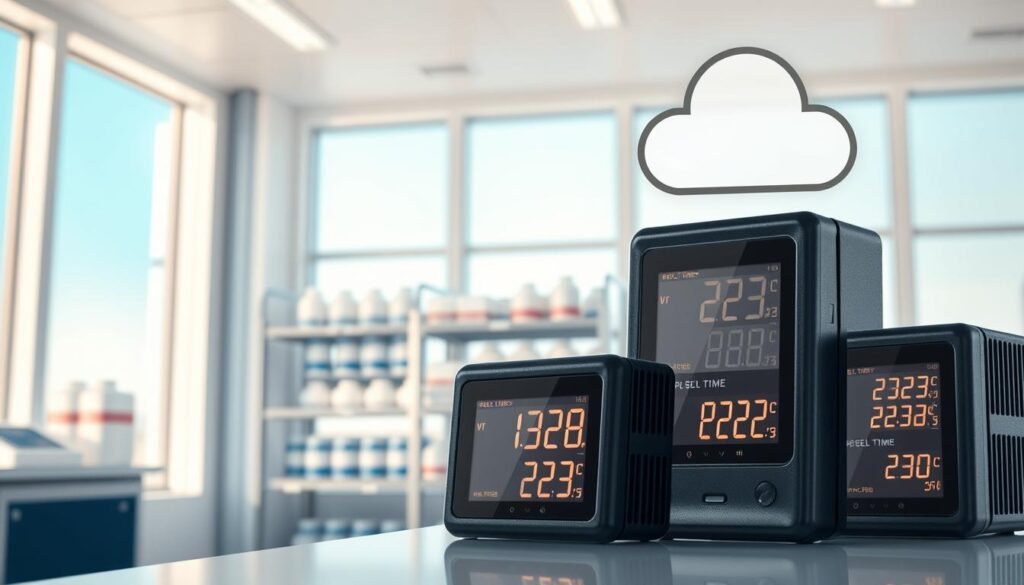
But a camera that only records is useless. Modern monitoring uses connectivity to send alerts. When these data loggers connect to the cloud, you get real-time updates. This means you can act fast if something goes wrong.
So, what should you watch? Here’s what’s important:
- Temperature Fluctuations: This is the biggest risk. Alerts for changes in temperature are your first defense.
- Door-Open Events: Was it a person or a problem with the seal? Knowing helps avoid mistakes.
- Power Status: Is the fridge even on? A logger with a battery backup can tell you.
- Humidity Levels: This is key for certain materials.
This system is your 24/7 lab guard. It’s like having a fire alarm that calls the fire department and texts you. If your cold chain chemicals start warming, you can act fast.
But what if the power goes out? A cloud-connected logger will alert you. But then what? Your power outage plan is your next step.
A good plan answers three key questions:
- Immediate Response: Who do you call first? (Hint: Facilities should be on speed dial.)
- Contingency Actions: Do you have backup generators? Are there places to store things temporarily?
- Product Assessment: What happens if the temperature changes? When does it mean the product is ruined?
Without a plan, your alarm system just tells you bad news. With a plan, you can manage the situation. It turns a crisis into a manageable problem.
This isn’t just about gadgets. It’s about oversight and stability. Monitoring helps you prove you’re doing things right and keeps your products safe. Trust is good, but knowing for sure is better.
Placement, clearance, and ventilation considerations
Putting a flammable refrigerator in a tight spot is like parking a fire truck in a narrow alley. It’s not smart. The real genius is in the empty space around it. OSHA and NFPA help you design this space wisely.
Clearance is key, not just a suggestion. NFPA 30 and safety rules set specific distances for storage. These rules help prevent fires and keep things safe. They ensure that storage areas are well-planned and safe.
Ventilation is like the storage room’s breathing system. OSHA 29 CFR 1910.106 talks a lot about it, for flammable liquids. Good air flow keeps vapors from building up. This is critical for isocyanates storage to avoid fires and toxic air.
Layout is important, mixing rules with common sense. Cold room management shows the value of space. A good layout helps you move and respond quickly. It’s all about safety and efficiency.
Think about your setup: Is it like a chess game or a bumper car? Is your flammable refrigerator in a good spot? Does your isocyanates storage have enough air flow? OSHA and NFPA give you the rules. Now, it’s up to you to create a safe and smart space.
Preventing condensation/corrosion and product degradation
Condensation isn’t just a problem on your iced tea glass. It’s a big issue in chemical storage, turning important tools into rust. It’s like entropy’s favorite trick, making things go wrong.
When you cool something too much, moisture in the air starts a party on your coldest surface. This party can ruin your product’s quality inside a storage unit.
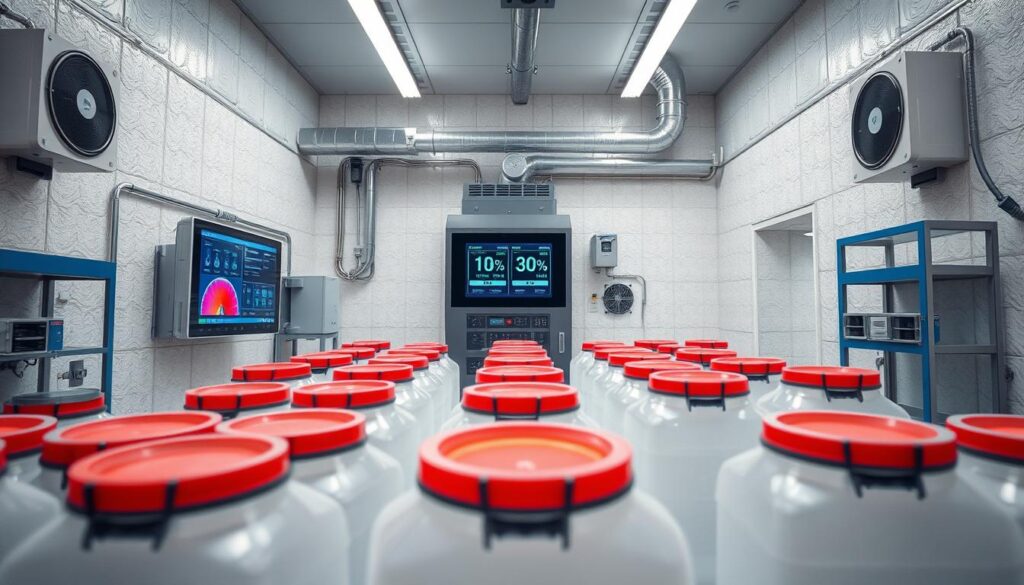
This isn’t just about rust. It’s a chain reaction of chemical problems. Moisture can make metal shelves corrode. This corrosion can then ruin sensitive materials.
For cold chain chemicals, a damp place can make things go bad faster. Your expensive chemicals can turn into useless, expensive weights.
To fight physics, start with sealed, insulated storage. In cold places, these units need to be very tight. This keeps warm, moist air out and cold surfaces dry.
Next, use the right hardware. Choose racks that resist corrosion and are easy to clean. These racks can handle humidity well. They keep your perishable reagents and biological samples safe.
Let’s talk about the real cost. For medicines, working right is key. If they degrade, they can’t save lives. For research, a bad sample can ruin months of work. This is serious, like a forgotten lunch in the fridge.
Your plan must be to act first. It includes:
- Environmental Control: Keep temperature and humidity in check to avoid dew.
- Material Science: Use storage furniture made for tough conditions.
- Vigilant Monitoring: Watch humidity with data loggers to catch problems early.
Keeping cold chain chemicals safe is key to a good lab. It makes sure your perishable reagents are ready to use, not ruined. It’s a fight against time, but with the right steps, you can win.
Inventory Rotation: FEFO, Shelf-Life Tags, and the Art of Not Spoiling Your Science
Your lab’s back shelf is like a forgotten produce drawer. What’s hidden there could ruin your experiment. It’s not just about keeping things tidy; it’s a key way to avoid waste and failed reactions.
For perishable reagents, the right way to manage inventory is everything. It can mean the difference between a perfect result and a costly mistake.
FEFO stands for First-Expired, First-Out. It’s like FIFO, but for labs. It means using the oldest items first. This keeps your work fresh and prevents waste.
FEFO is all about smart management. It stops older items from hiding behind newer ones. This way, you avoid using old, useless chemicals.
Shelf-life tags are key to this system. They tell you everything you need to know about a reagent. Receipt date, opening date, expiration date, and special handling notes are all important.
In crowded storage, these tags are your best friend. They make it easy to see what’s oldest and needs to be used first.
Some chemicals need extra care. Isocyanates, for example, can turn into a solid if not used right. You need to check if they have inhibitors to stop this.
This check is simple but important. It keeps your work safe and reliable. It’s a quick way to make sure your chemicals are good to use.
Keeping your storage organized is like running a kitchen. You want to use the oldest items first. This means putting new stock at the back. It’s a bit of a challenge, but it’s worth it to avoid mistakes.
The Rotation Readiness Checklist
| Component | Primary Purpose | Implementation Tip |
|---|---|---|
| FEFO Protocol | Ensures the oldest viable stock is used first, minimizing waste. | Physically place newly received items behind existing stock of the same material. |
| Standardized Shelf-Life Tags | Provides instant visual status of every container’s age and stability. | Use a consistent color-coding or format for dates (e.g., MM/DD/YYYY in bold). |
| Inhibitor Verification Log | Tracks stabilizer levels in sensitive chemicals to prevent polymerization. | Note the inhibitor type and recommended check frequency right on the container tag. |
| Access-First Design | Makes adhering to FEFO effortless during daily workflow. | Designate specific “use first” shelves or bins at the front of storage areas. |
| Regular Audit Schedule | Catoversight and identifies items approaching expiration. | Conduct a quick visual scan of all tags during monthly safety inspections. |
Managing perishable reagents is about taking care of them. It’s not just storing chemicals; it’s preserving their value. A good rotation system, with FEFO and clear tags, makes your inventory reliable. It’s the hard work behind the scenes that leads to great discoveries.
Documentation and calibration schedule
Paperwork is the unsung hero of many stories. In the world of temperature-controlled storage, your flammable refrigerator needs a solid calibration certificate to be trusted.
Your data loggers are like bathroom scales. You wouldn’t rely on them without a check. That yearly calibration proves they’re telling the truth about your storage’s conditions.
OSHA, NFPA, and EPA don’t just take your word for it. They need your records. These documents are key for permits, inspections, and defending your storage system in court.
Creating a strict calibration schedule is not just about following rules. It’s your strongest argument. It shows your entire system operates with precision. This paperwork is your proof of control.