

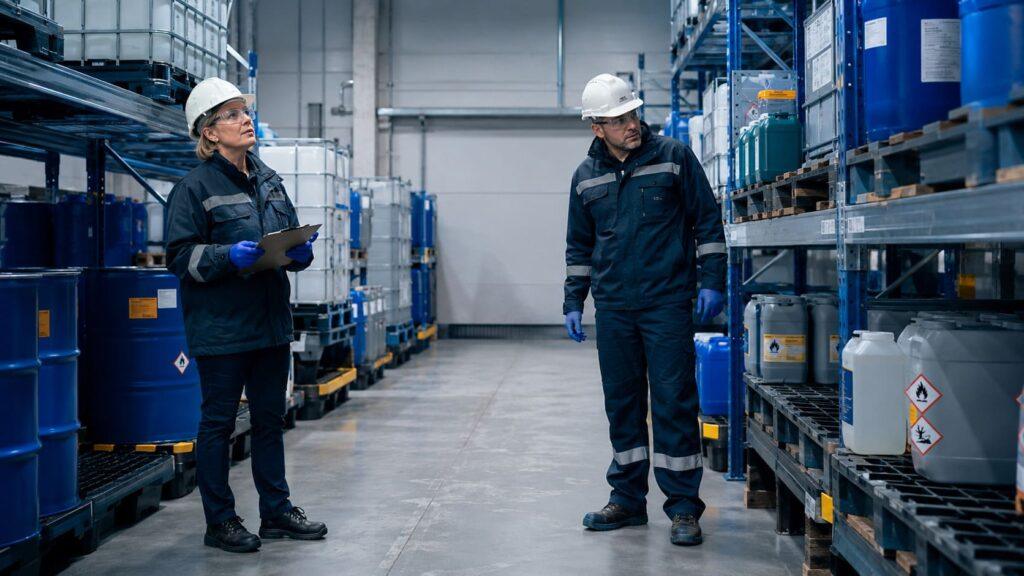
Chemical storage mistakes rarely announce themselves with a dramatic failure on day one. They usually begin as small compromises: a drum placed in the wrong area, a label that fades, a temperature-sensitive product left in ordinary warehouse space, or incompatible materials stored close enough to turn a minor spill into a serious incident.
That is why storage deserves more attention than it often receives. A facility that treats storage as passive space instead of active risk control can quietly expose itself to safety hazards, compliance findings, product loss, and supply interruptions. For materials with strict environmental needs, proper temperature-controlled storage is not a convenience; it is part of protecting the chemical, the people handling it, and the process that depends on it.
Why Chemical Storage Mistakes Become Business Problems
The biggest misconception about chemical storage is that the risk begins only when a product is opened, transferred, mixed, or used. In reality, many problems start while chemicals are sitting still.
A container may look stable while pressure builds inside. A corrosive may slowly weaken nearby packaging. A flammable liquid may be stored where ventilation, ignition control, or cabinet design does not match the hazard. A product may remain inside its expiration window but lose performance because temperature, humidity, or light exposure were not controlled.
These are not just safety concerns. They become purchasing problems, production problems, and customer-service problems. A batch delayed by questionable material can force rushed replacement orders. A failed inspection can stall operations. A spill in the wrong aisle can isolate inventory that was never directly involved.
The lesson is simple: storage is operational control. It shapes whether chemicals remain usable, traceable, compliant, and available when the business needs them.
Labels, SDS Access, And Segregation Still Carry The First Line Of Defense
A chemical storage area can look organized and still be dangerously unclear. Clean shelves do not matter much if workers cannot quickly identify what is inside a container, what hazard class it belongs to, and what should never sit beside it.
The foundation starts with hazard communication. Labels must remain readable, containers must be properly identified, and workers need practical access to safety data sheets, not just a forgotten binder or buried digital folder. OSHA’s Hazard Communication Standard gives facilities a useful compliance anchor because it connects classification, labeling, training, and chemical information into one safety system.
Segregation is where many facilities drift. Acids, bases, oxidizers, flammables, reactives, water-sensitive materials, and toxics should not be arranged by convenience, vendor, container size, or “where they fit.” They should be arranged by compatibility and hazard behavior.
That matters because chemical incidents often become worse when neighboring materials are pulled into the event. A leak from one container is bad. A leak that reaches an incompatible substance can become far more difficult to control.
The Hidden Cost Of Treating Storage Space Like Ordinary Warehouse Space
Chemical storage requires different thinking from ordinary inventory storage. A general warehouse mindset focuses on space efficiency, pick speed, and stock rotation. Those still matter, but they cannot override hazard control.
Common mistakes include placing chemicals near heat sources, storing drums directly on damaged floors, stacking containers beyond practical inspection height, ignoring secondary containment, and allowing temporary staging areas to become permanent storage zones. These errors often happen because nobody made a deliberate decision. The storage area simply evolved around daily pressure.
That is how small shortcuts become normal. A shipment arrives during a busy week. A pallet waits in a receiving area. A supervisor assumes it will be moved later. The next delivery arrives, then another. Before long, the “temporary” area contains materials that were never meant to be stored there.
The operational risk is obvious: temporary becomes permanent when storage discipline is weak. Once that happens, employees begin building workarounds around an unsafe layout.
A Practical Risk Table For Common Storage Failures
Chemical storage programs work best when teams can see how routine mistakes connect to wider consequences. The issue is not only whether a container is present in the right place. It is whether the storage decision protects people, records, product quality, and continuity.
| Storage Mistake | Safety Risk | Compliance Risk | Business Impact |
|---|---|---|---|
| Storing incompatible chemicals together | Spill escalation, reaction, fire, toxic release | Poor segregation controls | Damaged inventory, emergency response costs |
| Poor or missing labels | Misidentification during handling or spill response | Hazard communication weakness | Delays, disposal uncertainty, rework |
| Ignoring temperature or humidity limits | Product instability or degraded performance | Documentation gaps if quality is affected | Failed batches, replacement costs |
| Overcrowded storage areas | Blocked access, harder inspections, slower response | Housekeeping and emergency access issues | Longer downtime after a leak or incident |
| Weak waste-container controls | Exposure, leakage, mixed waste hazards | Hazardous waste management problems | Higher disposal cost, inspection findings |
The table shows why chemical storage should not be managed as a housekeeping task alone. Storage connects safety, environmental responsibility, procurement, production reliability, and emergency readiness.
Waste Areas Can Become Compliance Trouble Faster Than Teams Expect
Hazardous waste storage deserves special attention because it often receives less discipline than usable inventory. Teams may be careful with new product but less careful with waste containers, especially when containers are waiting for consolidation, pickup, or disposal paperwork.
That is a mistake. Waste areas can create serious exposure and compliance risks when containers are left open, labels are incomplete, incompatible wastes are accumulated near each other, or inspection routines become inconsistent. EPA’s hazardous waste generator guidance is a practical place for facilities to understand how generator responsibilities connect to storage, labeling, and management expectations.
Waste also creates a supply chain issue that is easy to underestimate. If waste accumulation is poorly controlled, production areas may lose usable space, disposal scheduling may become urgent, and operations may be forced to slow down until containers are removed or corrected.
The better approach is to treat waste storage as part of the same chemical management system, not as an afterthought at the end of the process. Waste is still chemistry, and it still needs compatible containers, clear labels, closed management, and routine oversight.
The Next Warning Signs Usually Appear Before The Incident
Most facilities get warning signs before a serious storage problem. The challenge is recognizing them early enough to act.
Watch for repeated “temporary” placements, rising numbers of partially used containers, faded or handwritten labels, blocked access to cabinets, inconsistent SDS retrieval, missing inspection records, unexplained product performance issues, and employees who rely on one experienced person to know where everything is.
Those are not minor administrative flaws. They are signs that the system depends too heavily on memory, habit, and individual judgment. A strong storage program should work even when the most experienced employee is absent.
Facilities should also pay attention to supplier and logistics pressure. Longer lead times, substitute materials, packaging changes, or rushed deliveries can all stress chemical storage controls. A facility that adds new chemicals without reviewing compatibility, temperature needs, shelf life, and waste implications is creating risk before the product ever reaches production.
The fix is not complicated, but it must be deliberate. Review storage by hazard class. Confirm container integrity. Check environmental conditions. Keep labels readable. Separate incompatible materials. Audit temporary staging. Train employees on what “wrong” looks like, not just where items belong.
Chemical storage mistakes become expensive because they hide in plain sight. The facilities that manage them best are not simply cleaner or more organized; they understand that every drum, bottle, tote, and waste container carries a decision. When storage is treated as a safety, compliance, and supply chain function, small corrections can prevent the kind of failure that reaches far beyond the storage room.