


Choosing the wrong chemical for your manufacturing line is like using a butter knife for heart surgery. It’s a big mistake. The consequences are huge, affecting the trillion-dollar global industry.
In places like car factories and labs, industrial chemicals are key. The market is growing at 4.1% each year. Dr. John Smith says, “The right materials improve product quality and make production better and greener.”
Make a wrong choice? It could lead to big problems. About 60% of production failures come from bad materials. This isn’t just a small issue. It’s a major decision that can make or break your operations.
Your Chemical Product Selection is very important. It’s a key part of your story, often overlooked but always critical.
Assessing Process Needs
The art of manufacturing selection starts with understanding your production process. It’s like a deep conversation with your line. You must figure out what it needs, like a detective solving a mystery.
Is it asking for a strong solvent or a gentle buffer? This is where you match your process with the right chemicals. Getting it wrong can be costly and even harmful.
There are two main types of production: batch processing and continuous flow. In batch processing, materials need to work well together. In continuous flow, consistency is key.
I once saw a shop that chose solvents like they were picking a soda. They thought any degreaser would do. But their parts looked like they’d been through a storm. The problem was the wrong chemical for their needs.
The solution was simple: ask what the chemical needed to do, not just be. They needed to remove tiny residue, not just clean the surface. This changed how they chose chemicals.
Your assessment should be just as direct. Ask yourself what your line really needs:
- Function First: Is it for cleaning, synthesis, or processing?
- Compatibility Check: Will it work with your equipment and materials?
- Process Personality: Does it need force or finesse?
Finding the right chemical isn’t about the best one. It’s about the right one for your process. That metal shop didn’t need a fancy solvent. They needed one that solved their specific problem.
Every line has its own needs and quirks. You’re like a therapist, detective, and matchmaker. Listen to what your process is saying. The answers are there, waiting for you.
Skipping this step is like playing with chemicals. Do the work now. Your business and sanity will thank you later.
Chemical Properties to Consider
Industrial chemicals are like actors in a play. Each has unique traits that affect their performance. You wouldn’t choose an actor who takes hours to get ready for a quick scene.
Choosing the right solvent is like picking the right actor. A solvent that dries too slow is like a slow plot twist in a long novel. You need one that dries fast.
Choosing chemicals is like forensic science. You’re not just reading labels; you’re studying molecules. Their properties affect everything from how well they work to how safe they are.
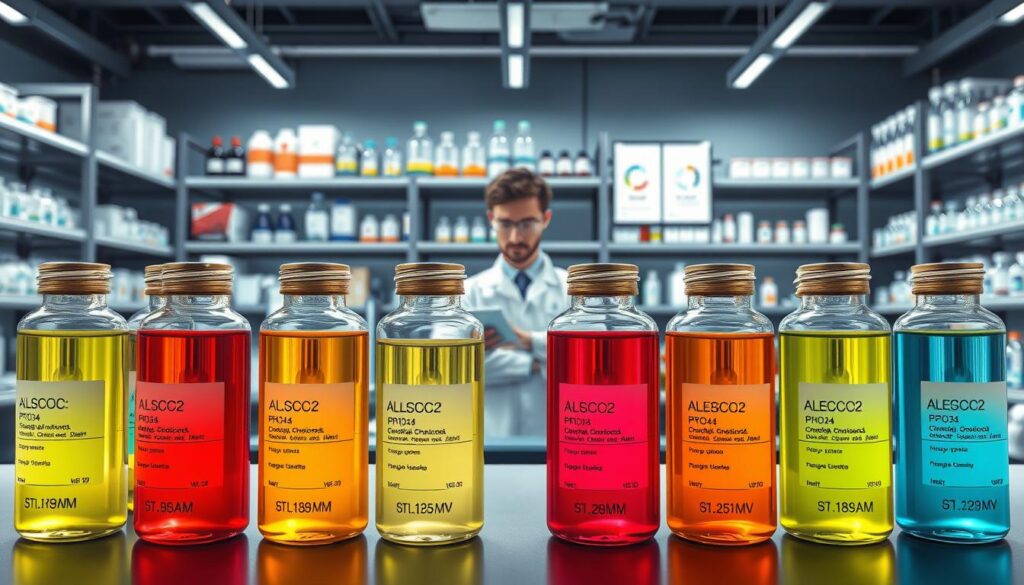
Let’s look at the key traits of chemicals. Polarity is important. It’s like how well molecules get along. Some solvents, like ethanol, mix well with water. Others, like hexane, don’t.
The boiling point is also key. It tells you how long a chemical will stay around. Some evaporate fast, while others take longer.
Toxicity and flammability are serious concerns. A great solvent might also be dangerous. You need to balance its power with safety measures.
| Chemical | Key Property | Performance Role | Special Considerations |
|---|---|---|---|
| Ethanol | Polar solvent, moderate boiling point | Versatile cleaner for polar contaminants | Flammable, requires proper storage |
| Hexane | Non-polar, low boiling point | Excellent for oil and grease removal | Highly flammable, neurotoxic with exposure |
| Acetone | Highly polar, very low boiling point | Fast-evaporating degreaser | Extremely flammable, strong odor |
| Isopropyl Alcohol | Polar, moderate evaporation rate | Electronics cleaning, disinfecting | Less toxic than alternatives, but flammable |
Solvency power is key. But the best solvent might also be too harsh on your equipment. Material compatibility is just as important.
High-purity Isopropyl Alcohol is like a trained actor. It cleans well without leaving residue. A generic blend might not be as good.
Choosing industrial chemicals is a risk assessment. You balance performance with safety and cost. The boiling point affects energy costs, and toxicity impacts PPE and insurance.
Every property works together like an orchestra. A higher boiling point might save energy but slow down drying. The right mix is safe, efficient, and cost-effective.
Vendor Screening
Vendor screening is where your manufacturing selection process becomes a strategic alliance. Choosing a supplier just for the lowest price is like picking a co-pilot for a stormy flight based on who brought the cheapest lunch. The data shows that 60% of production delays come from supply chain failures. Your vendor is more than a seller; they’re your logistical lifeline.
So, how do you find the reliable partners from the fly-by-night operators? It begins with a detailed look at their past performance. Can they deliver on time, every time, or will your production line wait like a commuter at a canceled train station?
Certifications are your first clue. Look for ISO 9001 for quality management systems and REACH compliance for handling chemicals globally. These are not just plaques; they show disciplined processes.
A true partner offers more than just products and invoices. They provide strong support services, like having a chemist on speed dial. Companies like Zibo Anhao Chemical Co., Ltd. and Globex Venture build their reputations on reliable supply chains and 24/7 technical support. This turns a transaction into a true collaboration.
Your evaluation must go deeper. Do they treat Material Safety Data Sheets (MSDS) as sacred, or as afterthoughts? A vendor’s transparency with testing results and safety documentation shows their integrity. For a deep dive into operational safety frameworks, reviewing the Offshore Chemical Selection Guidelines can set a high benchmark for what you should expect.
Ultimately, this stage is about vetting for resilience. It’s about finding a supplier who sees your success as tied to theirs. This forward-thinking approach in your manufacturing selection builds a long-term alliance that strengthens your entire operation against the unpredictable global market. It’s the difference between a shaky handshake and a rock-solid partnership.
Safety & Compliance
Working with industrial chemicals without safety is like making a movie without a stunt team. It’s exciting until someone gets hurt. In movies, they can just stop and start again. But in real life, accidents can’t be undone.
Wearing gloves and goggles is not just a suggestion. It’s your safety gear for a dangerous job. Personal protective equipment makes you safer. Without it, you risk serious harm.
Ventilation is not just nice to have. It’s essential for a safe work environment. Proper storage and fire safety are also key. They help prevent accidents and keep everyone safe.
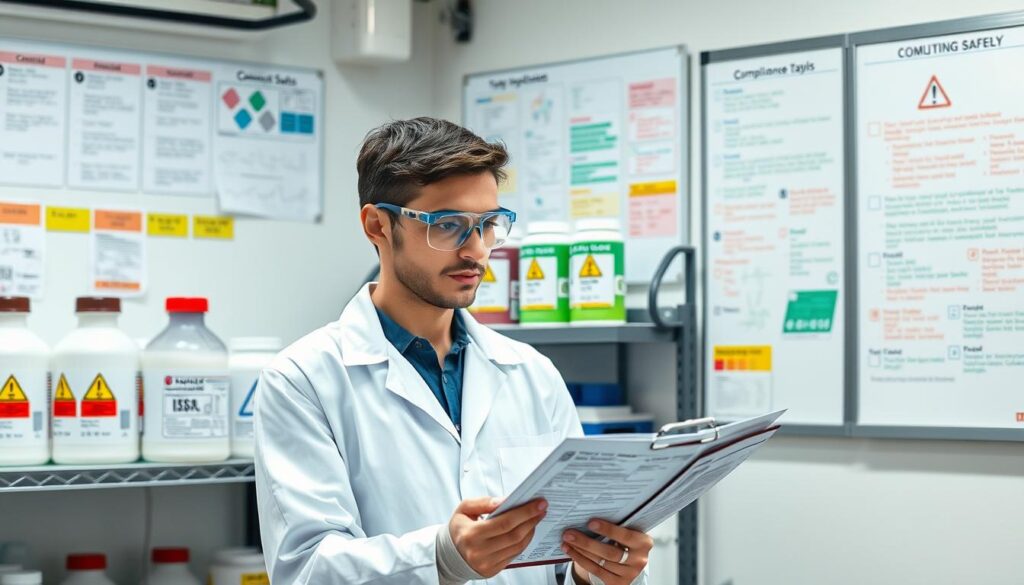
Regulations might seem strict, but they can actually help. Laws like the Clean Air Act and RCRA guide us to safer practices. They push us to find better, cleaner ways to work.
Seeing limits in regulations is like thinking Shakespeare was limited by his poetry form. But it’s in these limits that true innovation happens. OSHA’s rules protect workers and keep businesses safe.
Your supplier is a key partner in safety. A company like Zibo Anhao ensures all chemicals meet safety standards. They help you stay up-to-date with regulations and keep your team safe.
Safety and compliance are not about fear. They’re about smart risk management. It lets your team be creative and innovative, while keeping everyone safe. This way, you can focus on making things better, not dealing with legal issues.
Real-World Examples
If chemical selection were a movie genre, these real-world examples would be the Oscar-winning dramas with unexpected plot twists. Theory provides the script, but the factory floor delivers the blockbuster performance. Let’s examine two cases where manufacturing selection didn’t just solve problems—it rewrote entire business narratives.
Consider the precision metal parts company drowning in stubborn residue. Their initial chemical choice was the classic cost-cutting compromise, the equivalent of hiring an understudy for a lead role. The residue was more than a nuisance; it was a quality control villain threatening their entire production line.
The plot twist? Switching to 99% high-purity Isopropyl Alcohol. This wasn’t a minor adjustment—it was a complete strategic overhaul. The result? Crystal-clean parts, yes. But the real victory was in the subplot: significantly reduced VOC emissions and, surprisingly, lower overall operational costs. The environmental kudos were an unexpected bonus scene.
Then there’s the insulation industry’s unsung hero: Polyether Polyols. In the high-stakes world of building efficiency, selecting this specific raw material for polyurethane formulations became a game-changer. The data speaks for itself: thermal efficiency improvements up to 30%.
This isn’t incremental progress. It’s the difference between a standard building and an energy-saving superstar. The right manufacturing selection transformed a commodity product into a premium performance material. It turned thermal challenges into market advantages.
These stories highlight a key truth. Smart chemical choices act as force multipliers across operations. They touch everything from product quality to environmental compliance to the bottom line. For a deeper dive into the fundamental principles at play, explore these real-world examples of chemical reactions and their.
The lesson is clear. Viewing chemicals as mere line items is a strategic error. They are the active ingredients in your operational story. The right manufacturing selection is that moment when the protagonist finds the perfect tool—and the entire narrative clicks into place.
Conclusion
Think of your operation as a complex novel. The plot is your process. The characters are your chemicals. Choosing the right chemicals is key, not just a side task.
You’ve looked into each chemical’s background and picked the best vendors. This careful planning is what makes modern manufacturing work. It’s not just buying stuff; it’s picking the right elements for success.
Working with suppliers like BASF or Dow is more than a deal. It’s a partnership that brings efficiency to your work. This partnership boosts your success and makes your bottom line look better.
Don’t overlook the importance of chemical strategy. It’s the foundation of your story. The search for the perfect chemical partner is ongoing. Find them, and your production will shine.